
Report: Language Learning System
Here I introduce a method of quickly acquiring foreign languages.
Various methods for language learning are available to the prospective learner. Attending specialist language schools to receive training from a qualified language teacher and studying from the grammar up is the immediately obvious method, whereas diligent self-study without spending any money at all is another method. The question of which method is most effective is an entirely subjective one – one that depends on each individual person’s ability, so I will not speak to other people’s experiences — only my own. Below I explain the method that has been effective for me, and throughout this report, I refer back to this “system” as I experiment on acquiring one language.
The System:
My system blends artificial intelligence, software translation, manual input work and beginner-level textbooks.
The system is as follows:
① I take “interesting” content I wrote for myself and feed it through a machine translator into the target language;
② I diligently type up the machine-translated text word-for-word, and;
③ I consult a dictionary to look up words I do not understand.
The type-up stage in ② is where new words are learned, and doing this within familiar and interesting content makes the learning experience individualized and relevant. Additionally, this process also has the benefit (and challenge) of familiarizing oneself with using the keyboard in the target language.
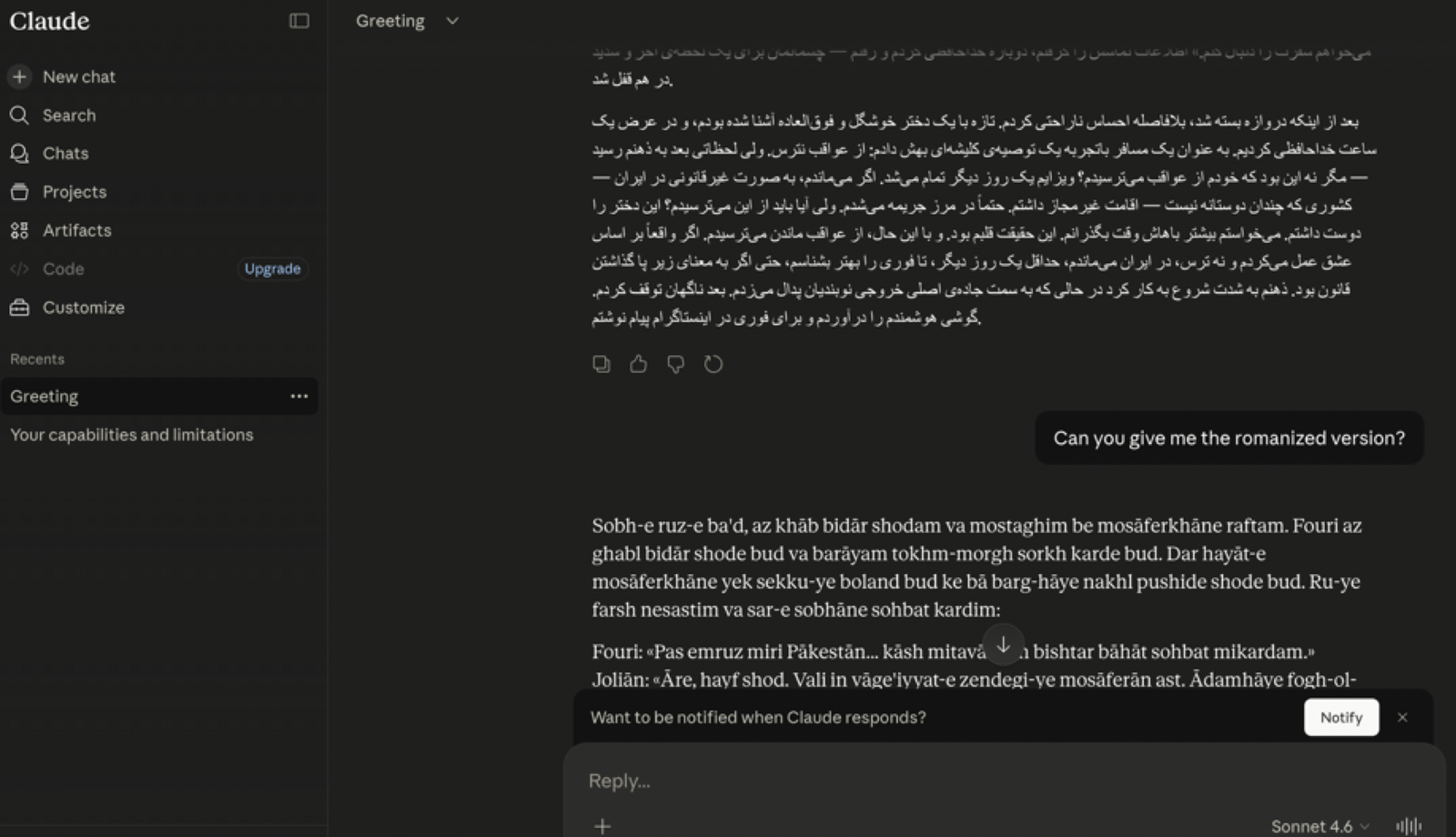
① Using Anthropic Claude AI to translate a short section of my book Eurasian Odyssey into the target language (Persian).
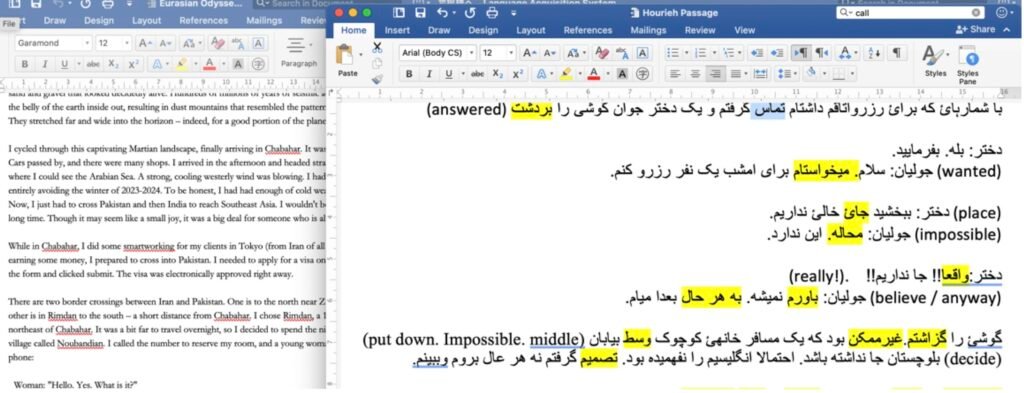
② Manipulating two Microsoft Word windows simultaneously, I manually type up the AI-translated, Persian-script document whilst cross-referencing the original text on the left-hand side (Yellow highlighting marks new vocabulary; its meaning is given in parentheses.)
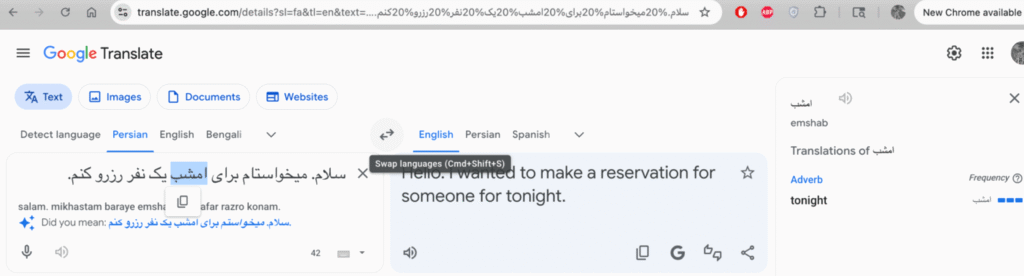
③ Double-checking word meanings with Google Translate. There is a quick and easy dictionary function on the right-hand side, indispensable for thoroughly understanding a given sentence.
Evaluating Progress
First of all, I should disclose that the languages I could already speak before I developed this system are English and Japanese. Two very different languages and outlooks on the world.
The languages I previously acquired using this system are: Italian and Russian. I can speak both to a reasonably functional degree. However, I could speak only a few words of Persian (Farsi) – the language I am seeking to acquire and improve in this report.
Rather than relying on official examinations to measure my Persian level, I would like to use a simple, practical measurement method using the telephone. For example, I am able to successfully hold a phone conversation in Italian (a language that I acquired by myself using this system). I regularly speak for 30 to 45 minutes on the phone with an Italian person who does not speak English at all.
On the other hand, with my former girlfriend, I could only manage to converse in Russian on the phone for about 10 minutes before leaning back into English conversation with her.
In Persian, however, I cannot hold a phone conversation for even 5 minutes.
So, if I manage to increase the amount of time I am able to converse in Persian over the phone, I will be able to say I have improved.
Experiment + Practice
To give myself ample opportunity to practice Persian, I will immerse myself in its linguistic and cultural environment. I hypothesised that this would produce quick results. So I decided to take 2-3 weeks traveling between Tajikistan and Afghanistan.
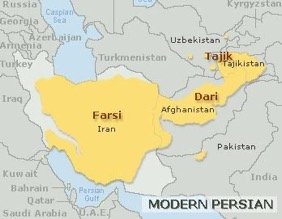
The map above shows the approximate extent of the linguistic zone where Persian and its dialects are spoken. From east to west, the Persian dialects of Tajik, Dari, and Farsi are spoken in Tajikistan, Afghanistan, and Iran, respectively.
So, in April 2026 I set out to acquire as much Persian as possible to extend the amount of time I can hold a conversation on the phone.
To Tajikistan
On April 6th, I flew from New Delhi, India, to Dushanbe, the capital city of Tajikistan, with my foldable bicycle in checked luggage. When I arrived at the airport, everyone around me was speaking Russian, and people spoke to me in Russian too. That’s because: A) my appearance is quite alike to the people from this region, and B) Tajikistan is a former Soviet state, so Russian is an official language alongside Tajik. In fact, Tajikistan is right at the crossroads of Russo-Iranian-Turkish languages and cultures and thus a supremely interesting country. Although I could respond to people speaking Russian without too much effort, I did not come here to practise Russian – I came to improve my Persian. So I tried speaking with locals in my halting Farsi.
The Tajik language is a dialect of Persian, and speakers of different countries can basically understand each other. What is different however, is the written script used. In Tajikistan the language is not written in Arabic script but expressed in Cyrillic script. By contrast, In Afghanistan and Iran, Arabic-derived script is used to express the same words.
Furthermore, nearly all urban Tajiks speak Russian, and many also speak English. Accordingly, to increase my opportunities to use Farsi and only Farsi, I decided to leave the Tajik capital and head south towards Afghanistan. A nose-first dive into the deep end.
The first few days brought a lot of rain, and I was holed-up at my hotel. Once the rain cleared, I leisurely made my way by bicycle in the direction of Afghanistan. The cleaner at my hotel in Dushanbe was a cute Tajik woman who kept glancing over at me, so I asked her if she would be willing to be my language practice partner. We exchanged Instagram accounts, and I had quickly secured a conversation partner with whom I could practice my Persian and to have phonecalls with to measure my progress.
The reason I could already speak a little Persian is due to the Eurasian Odyssey when I passed Iran and was captivated by the country’s culture, which then inspired me to study the language. The textbook I bought for that purpose is referenced below. It is an extremely well-written language learning book. Thanks to this book, I learned to read the Arabic-script used in Persian and learned the basic grammatical structures of Persian, even though I am still far from being able to say I can hold a conversation.

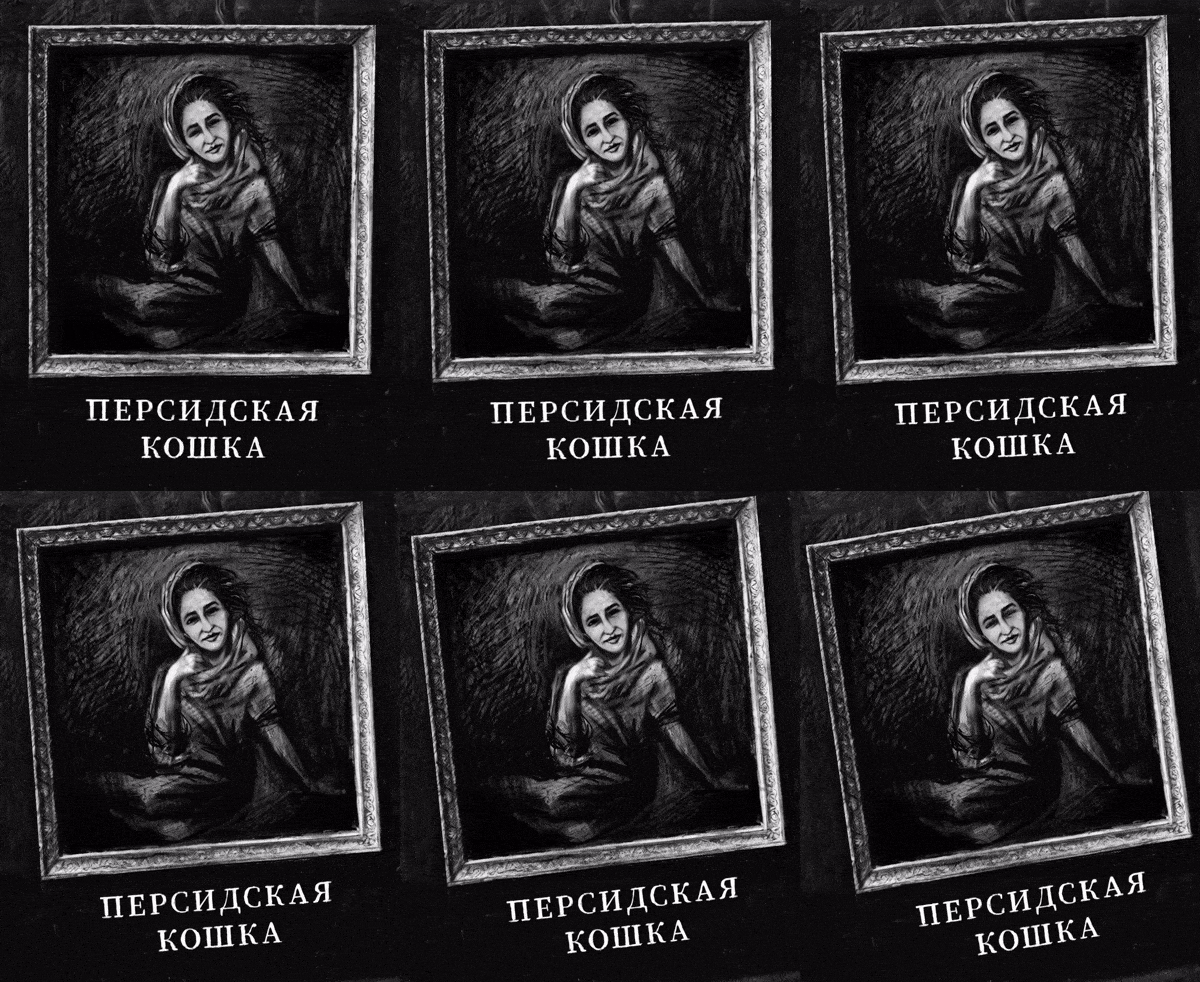
To be really honest though, the real reason I became captivated by Persian is, of course, due to a woman. I realised this little fact while cycling from Dushanbe towards the Afghan border during a particularly pretty sunset. The reason I chose to write this report, the reason I began studying Persian – lay in the strangely persistent influence of Fourie, the Persian cat who I left behind in Iran.
After a fleeting romance with her, I wrote this in Book 3 of the Eurasian Odyssey: “I left with some regret, yes – but with an even greater energy and determination: that I would learn Persian properly. And I would return someday“. Though the romance itself was brief, it has run deep and long. Perhaps that’s because we didn’t get to consummate our romance. Or perhaps that has nothing at all to do with it.
In any case, the last time I saw Fourie was over two years ago. Since then, I returned to Iran twice in vain attempts to reunite with her. Fourie did not give me that chance. The last time I visited Iran was just three months ago — right before the chaotic street protests of 2026 that left so many Iranians dead. Right before Iran’s internet shutdown. Shortly afterwards, America executed Operation: Epic Fury with the full-scale bombardment of Iran, culminating in the closure of the Strait of Hormuz.
Though Fourie and I write each other sometimes on Instagram, she refuses to actually meet with me in person, for reasons unbeknownst to any man. Yet, I cannot ignore the sense that she still seems to harbour some feelings for me, whilst puzzlingly not permitting us to meet again. And yet again, I find myself cycling in her direction. This time, however, the gravity of the situation is greater than ever. Now, warplanes rain down terror over the skies of her land. Iranian society and economy lay in ruins. Its currency has become worthless, with inflation bursting out of control. Fourie once shared with me her dreams — a fantasy of spreading her wings and traveling freely around the world like me. A fanciful little thought she had, when she phoned her sister to tell her that she had found in me a suitable travel partner. Such innocent dreams and fancies of hers were violently torn asunder from her by the politics of our times.
Still – in life, we don’t have any choice but to hold onto hope. And to that end, the vessel of the Eurasian Odyssey was approaching – laden with possibility. Like a James Bond film, there remained the faintest glimmer of hope – a reckless rescue mission to extract a Caspian beauty from two evils: the mad warmonger president Trump, and the Islamic Republic’s death grip on its peoples’ future. There is a possibility because, even as the internet has been cut off in Iran, in the southeastern Balochistan province where many of my Iranian friends live, a great many illegal Starlink terminals had already been smuggled in. Thus, I was able to communicate with my friends in Iran.
I spoke with them in Persian. They assured me that everyone was safe, thereby confirming to me that Fourie was alive and well, too.
J: “Come to Afghanistan and join me!”
Friend: “Inshallah!” (Islamic term: God willing!)
I fantasized and weighed the chances of rescuing Fourie from Iran. Zero. But even if she would refuse my offer to get her out of there (which she would, obviously – she’s a real Persian – not the kind to turn her back on her people and run), it’s all about the gesture; to provide her with the option to leave. Though her unlikely dreams of traveling the world freely had been torn asunder by the manifold injustices of our times, I still wanted and needed to show her that my hand of friendship reached out to her from beyond the confines of her country. I wanted to let her know that she had not been forgotten. I imagined conveying all of this to Fourie in her native Persian tongue as I rode the long road to Afghanistan. And that is when I realised: this is how you learn a language.
By connecting words one by one, constructing — even with broken grammar — a sentence which allows the other person to understand your feelings and determination – that’s the stuff of language learning. And then I remembered one more thing: that this is exactly how I once learned Russian, too. Motivated by an intense hatred towards the Russian beauty Nastasya Filippovna – another heroine who appears in the Eurasian Odyssey, with whom I had fallen in love with and by whom I was betrayed. I recalled that I had once acquired Russian driven by intense feeling. Indeed, I remembered practising Russian while cycling alone through the desert near the Iran-Pakistan border on a certain moisty night two years ago. Nastasya used to say things like “Because I am a woman, I can do xyz” using her sex as an excuse to behave as she pleased. I imagined what I would say to her if I was there and she mentioned being a woman again: “Какая женщина, блядь. Вы ШЛЮХА. Вот такая вы!!” (What do you mean – a woman? Fuck! You’re a slag!! That is what you are!!)
Of course, even though we did meet again and I held her in my arms once more, I never did say such nasty words to her. But the hatred I held for her did have the side effect of expanding my Russian vocabulary.
And once again, I was imagining, while riding my bicycle, the practice of conveying to a woman I loved the feelings I wanted to share — in her mother tongue:
بیا به مزار شریف به مان
بعگئرئ پول از مان. و رویاهایت را به حقیقت تبدیل کن
(Come to Mazar-i-Sharif, to me. Come and get money from me. And make your dreams come true.)
So, although there are many methods and tricks for language learning, I personally found that preceding all of that, a teleological reason was indispensable. A true “desire”. Be it a desire rooted in love or one rooted in hatred, an intense desire to throw off the heavy emotions held in one’s chest out into the world was needed. In my case: an innocent woman with whom I fell in love with on that long Odyssean road.
To Afghanistan
On April 13th, I crossed into Afghanistan. The southern bank of the muddy Panj River was the northern border of Afghanistan. I arrived at the border at 4:00 PM, just before the immigration office was closing up for the day. The immigration officer who received me invited me into his air-conditioned office and instructed me to spend the night at the border hotel, as he was going home and would process my paperwork the following day. He was a member of the Taliban. However, the Taliban of today is different from the Taliban of yesteryear that fought and resisted American occupation for 20 years. This Taliban immigration officer was a civil servant. Accordingly, he treated me with great respect, and sure enough, after I spent one night at the border, he proceeded with my entry paperwork the following morning without issue. The visa fee was 80 dollars and took about an hour to issue. The border village was very simple, and unlike Tajikistan, the road was broken in places and full of dust. All the men of the village wore the same clothes – the shalwar kameez. There were no women to be seen anywhere outdoors. It seemed that Afghanistan was very similar to Pakistan, a country where the rules of Islam are formalized under Islamic law called “Sharia”.
I tried the Persian I knew in the border village, and was able to communicate with the local Afghans successfully. From ordering kebabs to finding out which villagers were Hafiz (a Hafiz refers to someone who has memorised the entirety of the Koran at an Islamic boarding school called a “Madrasa”. Hafiz are held to the highest standing in Islamic societies). While initial conversations flowed well enough, I lacked the vocabulary to go beyond that. I needed to study Persian more.
The first proper city I headed to was Kunduz. Here, I found a café serving coffee brewed from fresh beans, so that I may enjoy fresh coffee in the morning – a rare treat in otherwise bland Afghanistan. The café’s proprietor was a young Afghan named “Yaya.” He studied in India for 7 years, and could speak English and Hindi in addition to his native Dari Persian. He belonged to the rising elite of Afghanistan. Unlike the ragtag Taliban members gathered from remote mountain villages, Yaya had completed his Islamic studies in Afghanistan before receiving a world-class Western education in India. Although I was deliberately avoiding English conversation to practice my Persian, on this second day in Afghanistan, I accepted Yaya’s invitation and went for a drive with him to a neighbouring town called Khanabad. He said there was a delicious restaurant there. He also promised to take me to the “Badakhshan” region in north-eastern Afghanistan at a later date if our schedules permitted.
At the restaurant, typical Central Asian fare of pilaf rice and kebab were served. I was sitting on the carpet floor eating with my bare hands when I noticed a tribal Afghan man sitting in the corner of the room. I became fascinated with the way he ate. The 40-something year old tribal man wore a huge turban around his head. He ate the pilaf rice dextrously, using only his right hand to pick out every piece of meat left on the big bone hidden under the pile of savoury-sweet rice. He didn’t leave a dollop of marrow, nor a sliver of cartilage behind on the bone. As a Westerner, I had always impulsively looked down on people who ate with their bare hands. But watching this tribal man eat his meal with such skill and panache, a newfound respect rose inside of me. There was technique and artistry in eating with bare hands. Just as Westerners deftly wield their knives and forks at the dining table – just as Japanese freely manipulate chopsticks as extensions of their fingers, the tribal Afghan man ate so tidily with his hand not leaving a single morsel of food on his plate. He rose from the carpet, and as he walked past me to slip into his sandals, he shot a glance and made eye contact with me – surely because he had sensed my fascination and gaze. I told him: “You eat very well”. He replied: “I had an appetite” — which Yaya translated for me, as the tribal man’s Dari was too fast for me to follow. It was a small but significant communication, as something new was learned and acquired. Then, a beggar girl came into the restaurant, making her way around, badgering the diners for money. Afghan beggars are the most persistent and aggressive I have seen. She asked me for money too, and I sent her away saying “Later, later. I’m eating” in Persian.
Following the example set by the tribal man, I finished our entire plate of rice cleanly without leaving a single morsel. Yaya looked impressed by my eagerness to learn, and said he would go to the mosque behind the town square to pray and politely asked me to wait outside (praying five times a day is called Namaz in Islam). While I waited on the street, many Afghans came to talk to me, and before I knew it, a crowd had gathered around me. A foreigner that spoke a little Persian was a rare sight in this town. Then, from behind the crowd, I felt a gaze. About 5 metres behind the crowd, over by a ditch, the beggar girl from earlier stared at me. Her pure and innocent curiosity watching me with the crowd around was cute. But what was cuter still was that I had not forgotten my promise to her, so I summoned her in Persian: “Come over here.”
The girl beggar now stood before me, now also surrounded by the crowd. I made her beg.
J: “So then — how much do you want?”
Beggar girl: “Ummmmm…” (Blushing and breaking into a sweat)
J: “Go on then, tell me how much you want.”
The girl was quite flustered. As a beggar she would normally collect whatever money she is given. Now, being asked specifically how much she wanted had apparently caught her off-guard. Shyly, the girl squeaked: “200 Afghani!” (about 3 bucks). The crowd collectively gasped at her boldness.
J: “Why do you want 200 Afghani only? Why 200 and not 300?”
For a moment, the beggar and the crowd fell silent and still, confused. I took out the cash I had in my pocket, handed a sole 200 Afghani note to the girl, and with the same motion drew out a 1,000 Afghani note from my clip and held it up. “Look — I had 1,000 Afghani!!” The girl grabbed the 200 Afghani and, at once, ran away. I laughed, and the crowd laughed too. A contagious positive vibe spread throughout the square. Right after, Yaya returned from the mosque.
These small communications are enjoyable, of course, as well as being precious opportunities to advance my Persian language skills. But more than that, such interactions facilitated communication between people of vastly different backgrounds, cultures, and circumstances, and we shared our diverse and exquisitely interesting humanness with one another.
***
During my first week in Afghanistan, I managed — just barely — to succeed in these brief but deep interactions with locals. Conversations with young café owners about the purpose of my coming to Afghanistan… sharing and eating real cocoa I had obtained in Trinidad & Tobago with a handmade ice cream artisan who had forcibly been deported from Turkey… a heated 15-minute argument with a taxi driver over 300 Afghani… and so on.
It seemed I had acquired enough Persian to look after myself. Ordering food whilst conveying my preferences, negotiating accommodation — all that came easily to me. But I struggled to hold any meaningful conversations beyond the initial phase. Even as I exchanged contacts with Afghans I had met along the way, understanding the voice notes they sent me on WhatsApp was difficult (communicating face-to-face includes gestures and body language, and I realised how much I had been relying on those until now).
As I cycled southwards through Afghanistan, drawing closer to the Hindu Kush mountain range that dominates the centre of the country, I was enveloped in an unpleasant miasma of air thick with sand, dust and pollen, and my breathing suffered badly – so much so that I did not feel confident to traverse the mountains in this state. So I took a taxi to the capital, Kabul.
I had not worked on the language learning system introduced at the beginning of this report since arriving in Afghanistan. I felt that sitting in front of a computer was a waste of valuable face time with locals. But if I didn’t take seriously the painstaking work of typing up my book in Persian and study it simultaneously, I cannot demonstrate the effectiveness of the system, which is the main scope of this report. It’s a problem. Since arriving in the capital Kabul, I wandered the streets aimlessly, having only trivial, shallow conversations with randoms, and still ending up in a conversational cul-de-sac.
Then, an interesting mission came to me. I had been in daily contact with a stripper named “Cleo” I had met in Atlanta, USA. Our relationship had grown considerably closer as she kept me company with her daily messages as I travelled Afghanistan. I told her that I wanted to gift her something from Afghanistan, and she made an interesting request: “Kush Oil” — a massage oil obtained from the hemp plant. She was sure that a good quality one could be sourced in Afghanistan. I accepted the mission and one morning cycled to Kabul’s biggest bazaar. There, I planned to use my Persian to track down a quality oil for Cleo. But this challenge was not really a challenge. I easily located the Kush Oil at a shop in the innermost part of the market.
At the hotel where I was staying in Kabul, I noticed a lone foreign woman in the breakfast area and approached. She was “Diana”, a Hungarian traveller with a blog and a considerable social media presence. She ran a business offering tours to Afghanistan and other dangerous countries in the Middle East, charging $920 per head to those interested in visiting Afghanistan but lacked the courage to explore it by themselves. She had just finished a tour — 4 out of 6 clients had cancelled (no refunds, of course). Apparently, her clients’ parents had forbidden them from travelling to Afghanistan because of the risk, and also because some flights had stopped running due to the breakout of war between Iran and America. This was Diana’s third visit to Afghanistan, but she could not speak Persian at all. Nevertheless, being a businesswoman, she had cultivated various local connections, and that evening she invited me to a gathering of Afghanistan tour operators. There, I got to talking with a cute, authentic Afghan woman and gained a sense of what they were like. Other than that, I had no opportunities whatsoever on this trip to interact with Afghan women.
Afghanistan tour operators. Hard to think of a business more niche than this!
I spent five days in Kabul, using my jarring Persian at markets and such, and that was about all I could manage. I realized that Persian simply cannot be learned so easily in such a short time. I hit an invisible ceiling, unable to go higher. I wanted to go out and have real conversations with people, but remained stuck at a level where I could broach subjects but couldn’t keep up with those conversations I started.
For my last day in Kabul, I spent the night at the historic Intercontinental Hotel. This hotel was designed by a prestigious British architect, but since the Taliban seized it, it has been frozen in time. Naturally, apart from foreign investors with a taste for political risk, Afghanistan simply isn’t a country to invest money in. Like a fortress built atop a strategic hill overlooking both the west and east of Kabul, it is said that whoever controls the Intercontinental Hotel controls all of Afghanistan. I learned about this historic hotel from reading a long article in The Guardian newspaper two years ago, and it made me want to someday stay there. At last, the opportunity came in my life. When I explained this to the hotel receptionist in Persian, he halved the room rate for me.
* * *
I was done with Afghanistan. I had no desire to go any deeper into the country. The air pollution was relentless, the cities were filthy, the food monotonous beyond description. These people seemed to eat nothing but pilaf rice and kebab. On top of that, seeing animals slaughtered by the roadside with their meat left hanging bare in that dust-filled air left me with a disgust and disdain for Afghanistan. And so, I decided to return to Tajikistan and took the front passenger seat of a long-distance shared taxi heading north from Kabul to the city of Kunduz. I thought of ending my time in Afghanistan with a roadtrip to Badakhshan with my new friend Yaya. Three men sat in the back of the taxi – two were armed Taliban mujahideen.
During the long ride to Kunduz, the one in the middle named “Muhammad” started clowning me for not having a wife or any children yet. Our taxi driver was used as an example: one year older than me, the driver had 2 wives and 9 children. He would earn $20 from me for the 350km-drive through the dark.
Muhammad then started badgering me about why I refused to say if I was a Muslim. I told him in clear Persian that faith is a private matter. He surely understood my words, but I already knew from experience that Afghans do not understand the concept of privacy in matters of faith. He kept pushing, trying to intimidate me into reciting the “Kalimat” – the Islamic declaration by which you formally declare yourself Muslim – right where I sat in the passenger seat. I refused again, saying “I don’t want to”. People from Muslim developing countries have this really annoying habit. They persistently push their religion onto foreigners, and cannot comprehend why we might not appreciate that. The other passengers were thoroughly enjoying the whole spectacle. I decided I’d had enough.
I asked Taliban Muhammad whether he was a Hafiz. Muhammad declared proudly that he was a memorizer of the Koran, and the other passengers gave him his due respect.
Then I said: “Recite Surah 8, verse 24 for me.” This verse is one of my personal favourites. It speaks to the idea that nothing other than God may come between a man and his heart. The perfect verse, under the circumstances.
Muhammad: “You recite it!”
Julian: “No, you recite it. I’m not the Hafiz. You are.”
Muhammad: “No, no, you recite it!”
Julian: “Why… Have you forgotten it?”
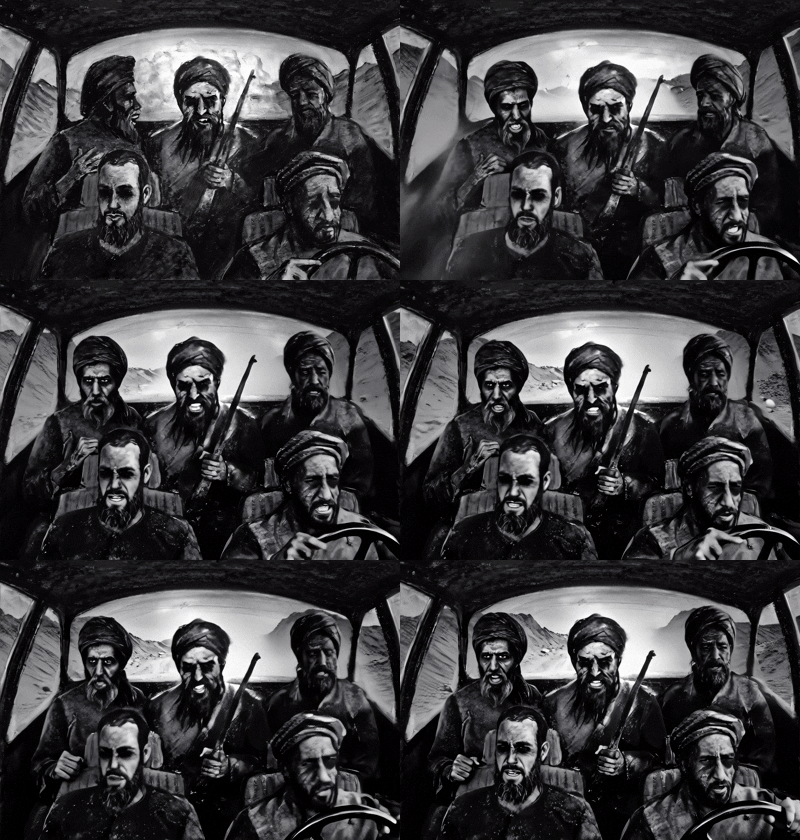
To spare Muhammad his blushes, one of the other passengers quickly Googled the verse and read it off his phone in Arabic. The whole affair was thoroughly humiliating for Taliban Muhammad. He got off at his town without a word, came to the passenger window, reached his hand in, and shook my hand before leaving. The moment he was gone, the remaining passengers of the taxi let out a collective sigh of relief. 😆
The incident was interesting for what it revealed. Because these people who supposedly wear Islam on their sleeves revealed themselves as quite ignorant and primitive. A Hafiz, no less, the supposed guardian of Allah’s word, a man whose only worldly purpose is to have memorised the Koran — had forgotten it. And although the taxi driver was a decent enough man, supporting 9 children and 2 wives was somehow seen as a flex in this culture. I thought about a man I’d met two years ago in Balochistan who boasted of having 4 wives and 25 children, as well as roughly the same number of camels. In a culture where women are essentially breeding stock for reproduction and children are just a running tally, what does a man actually see when he looks at himself in the mirror? Fourie had once confided in me: “That a man would only be interested in a woman’s body. That’s such a shame. There is so much more… So much…” She was dead right. There was.
And with so many children, how do you even remember all their names? And if one were to perish as a shahed — a “martyr” in a suicide attack on a busy marketplace or mosque of a rival faction or some other civilian target — how proud would that make them? The fact that one of the Taliban leader’s own sons was “martyred” in exactly that way is perhaps most telling of what a despicable underbelly this culture has.
The taxi ride harkened me back to a conversation I had on that same trip in Iran on the Eurasian Odyssey through Balochistan. A man who put me up in his home one night told me of how he despised his father. His father had four wives – the maximum permitted by his religion, plus whatever slave women he owned. He spoke of how his father’s licentiousness and acquisitiveness made his true mother suffer. Of all the accounts of polygamy I’ve ever heard, this one coming from a child produced by it was by far the most impressive. He’d seen the “true” Islam from the inside. He knew exactly what polygamy meant. And when he told me he could only ever have one wife – the one he had, he said so with the kind of smile that belonged to someone who chose freely, with full knowledge of the alternative. Tears ran down his face as he said: “One wife is enough”.
I was turned. That was until the morning after I slept in his guest room, as I went to leave, all the women of his household came out from their “harem” to see this bicycle traveller off, and in doing so, revealed to me the irresistible draw of Islamic polygamy. A gallery of drop-dead gorgeous women and girls, all looking uncannily similar. I was treated to a truly rare sight in Islamic society. A beauty difficult to resist. In that moment, I understood exactly why jealous Muslim men accumulated women for themselves, why they “kept” them to themselves.
To Badakhshan
Defeated by Afghanistan’s dust and sand, the tumultuous taxi brought me back to Kunduz, close to the border with Tajikistan. Afghanistan was completely unsuitable for cycling. The roads are atrocious, and the air made breathing difficult for me for ten straight days. I went straight back to Yaya’s café. Even at 01:00AM his resident staff opened the door to let me in. Yaya was sleeping upstairs but woke up to welcome me in. The next morning, we would set off for Badakhshan – the trip he’d promised me.
Badakhshan is a vast, mountainous region comprising the far northeast of Afghanistan and the enormous peaks throughout it. It stretches from the eastern half of Tajikistan up to the Chinese border and down to the Wakhan Corridor, a thin sliver of Afghan territory reaching out to China. We needed a car. Yaya arranged for a friend with a Toyota. Afghans, like Iranians, have an almost religious devotion to Toyota, and I took the opportunity to drive the mountain roads myself for about an hour. The road conditions were brutal – even the Prius felt as if it was going to fall apart into pieces. After six hours we arrived at the town of Baharak. One of Yaya’s friends would put us up for the night.
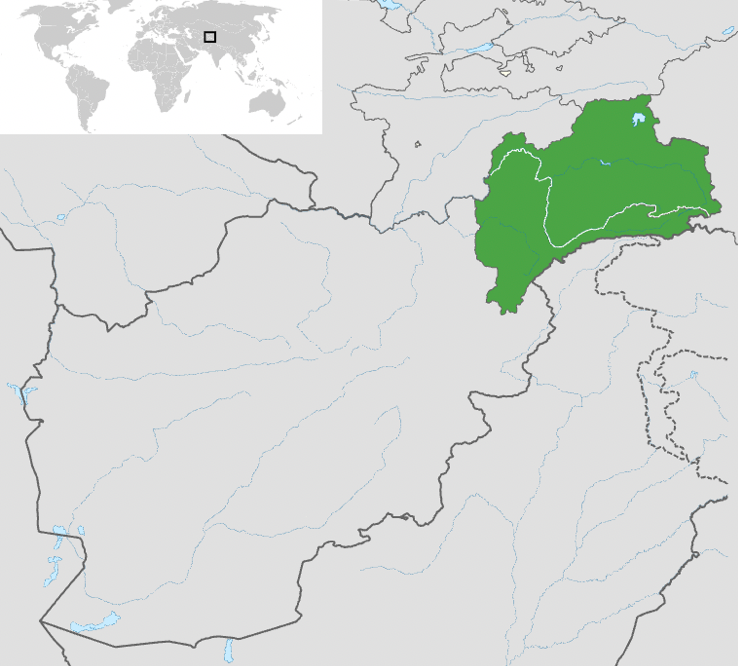
As we drew closer to Baharak, the air changed. Cleaner than anything I’d breathed since entering Afghanistan. Fresh mountain air. Mountains spread in every direction, with plenty of snow still sitting on those peaks. For the first time in a long while, I felt something like happiness and calm. I needed that. My Afghan experience up to that point had been almost entirely negative. The pollution, the poverty, the relentless inquisitions from Muslims. I was fed up of this shithole. Then, arriving at Badakhshan, I finally felt like I arrived in the real Afghanistan. Somewhere near the end of the drive, Yaya suddenly shouted: “Look over there! Opium flowers!!” and pointed from the window at a small field in a picturesque spot along a river.
We arrived at the house in Baharak just before sunset and immediately went out before it got dark. As the sun was going down, we laid a Persian carpet on a patch of grass by the riverbank and sat down for some snack and juice. A strong smell drifted over from some young men nearby. I went over, asked about it, and tried a taste of the local green.
I couldn’t keep up with my companions’ Dari conversation on the carpet, and sitting on a small rug all bunched-up together was a waste of the space around us, so I got up and walked about the meadow alone. The scenery was quiet and calming. As it rapidly got dark and the green started to take hold of my mind, I returned to my friends on the carpet. As I watched from a distance I realized: I had failed. If I had genuinely acquired Persian in a short frame of time, I’d have been on that rug deep in conversation with my newfound friends. But life isn’t so easy, and things don’t go as planned. Right then, mid-conversation, our host for the night – Yaya’s friend – stood up suddenly from the carpet and began to pray, facing upstream along the river. It was a completely natural movement. The others showed no reaction whatsoever to this and kept on talking. I watched, and something in my mind turned permanently. This was the real face of Islam, I thought to myself.
In all my years of spending time with Muslims around the world, I had never once seen someone stop whatever they were doing – mid-sentence, mid-meal – to pray to God. They had not been prioritising God. In this moment, the difference became crystal clear.
On the banks of the fast river, he performed the Namaz alongside his companions. I grabbed Yaya: “Coming to Afghanistan, this is the first time I’ve seen true Islam. I’ve never seen guys that start praying even in the middle of a conversation”.
Yaya: “Everything has its time. And when the time comes to pray to Allah, we believe we should take the time to pray.”
J: “After this fucking time in Afghanistan – all the shit, the dirt, the pollution – coming here to Badakhshan and spending time with you guys like this – I feel like I finally found the real Afghanistan, and the real Islam. Brother, could I join you for the next Namaz?”
Yaya: “Please. Let’s pray together. It would be an honour.”
Clear snowmelt water flowed just a few feet away, so I crouched down on some rocks at a shallow part of the bank and began washing my hands, feet, and face. Before performing Namaz – before praying to God – there is a ritual called Wudu where you purify not only your inner state but your outer body. You wash the limbs and orifices that have been used since the last prayer. The eyes, nostrils, ears, mouth. If you’ve urinated, you wash the opening. Same applies to the backside. Once Wudu is complete, prayer may begin. I stood next to Yaya on the carpet and imitated his movements. My face, hands and feet, washed in the snowmelt river water and cold, were wrapped in the gentle, clean and mild breeze that blew through this Badakhshan valley. Cold winds of inspiration. The kind that leads one somewhere new. And it had the clean air which I had needed most.
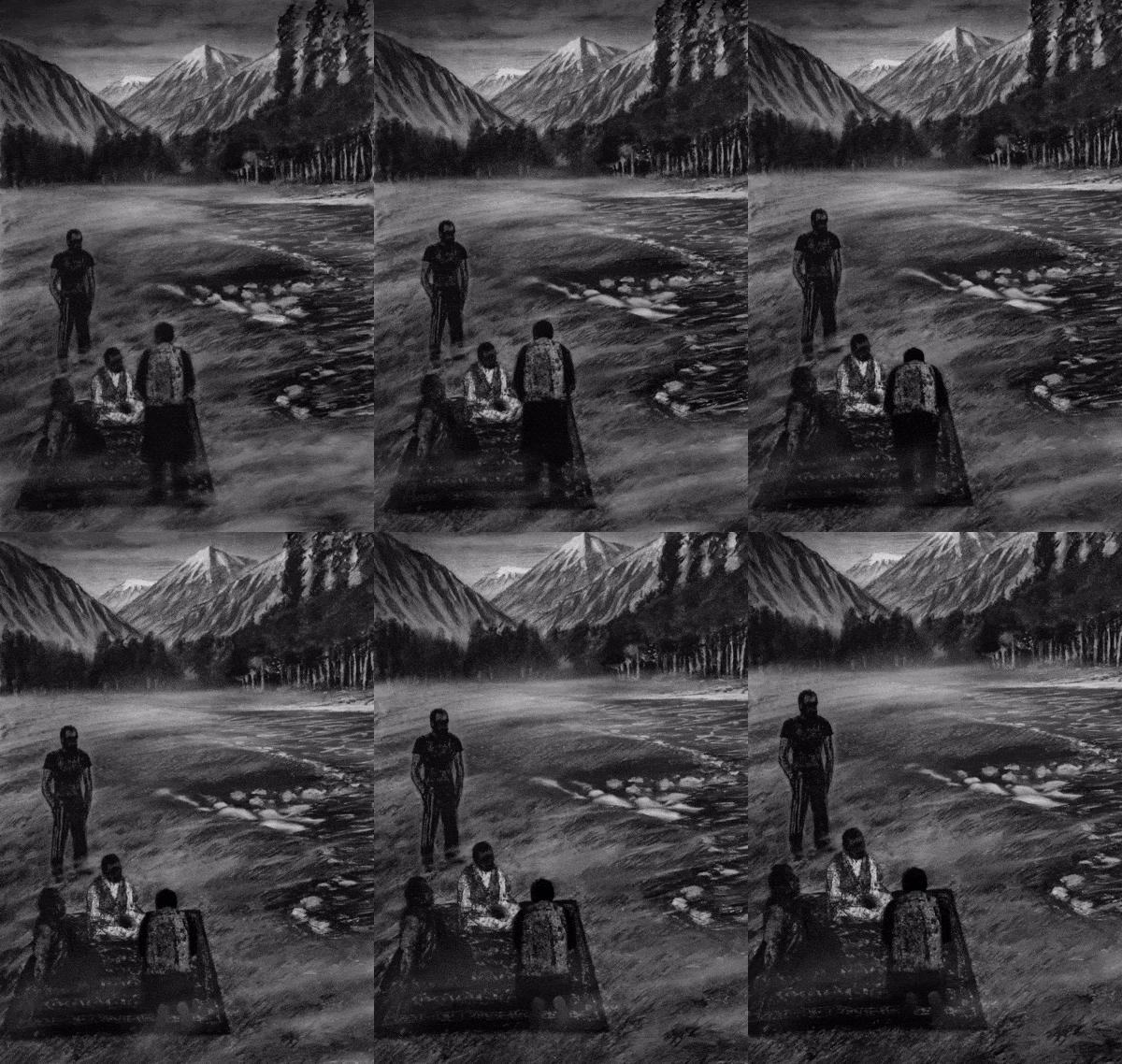
Yaya had learned to read Koranic Arabic at a Madrasa, so I couldn’t imitate the words he spoke during the prayer. But I had read the Koran in English, so I understood the intent. I pressed my forehead to the ground and conveyed my gratitude to God. Just before our Namaz concluded, Yaya quietly chanted “Astaghfirullah, Astaghfirullah.”
I had heard that word before – or rather, it had been said to me before. By Muslims, when I’d done something they considered forbidden. I think I may have slapped a girl on her backside or something. The word carried a very negative association for me. I asked Yaya:
J: “Did you say Astaghfirullah because you just performed Namaz alongside a non-Muslim?”
Yaya: “Not at all! Astaghfirullah means ‘God, please forgive me’. It’s a completely ordinary word used in regular Namaz!”
J: “I see. Well, honestly speaking, a lot of the Muslims I’ve dealt with over the years have left me with a negative impression. They often use Arabic words in contexts that Westerners cannot understand the nuance. They pushing their religion on people like salespeople. They spread their filthy carpets on the pavement and perform Namaz en masse in broad daylight, which is completely inappropriate in Western society. That kind of Muslim genuinely put me off.”
Yaya: “Hahaha. We don’t accept them either. We call them ‘American Muslims’. Hahahahaha!”
J: “Lol. Exactly. I have to say that Western society is fundamentally incompatible with Islam. There’s pork, there’s alcohol, and women that walk around with their bodies on display. Coming from elsewhere into that world and trying to live an Islamic way of life – how can they ever hope to find inner peace and satisfaction? And yet, Western Muslims (or so-called American Muslims) keep trying to impose their Islamic identity on themselves and their surroundings, even as they themselves have turned their backs on their own societies! Meanwhile, leftist Westerners pour fuel over the flames. ‘Woke’ people with ZERO cultural literacy push ‘Diversity’ without even thinking what that actually entails. In hindsight, the Culture Wars were completely predictable. True Muslims belong in clean, peaceful environments – like right here in Badakhshan! That simple life, close to the land and close to God – that’s where Islam works best. Dragging Islam into Europe produces nothing but conflict and misery for themselves.”
Yaya: “I can’t agree with you more. And on top of that, while the number of Muslims in Europe grow, capitalism, which is of European origin, is spreading into our traditionally Islamic societies and is slowly destroying our culture and our dignity. I consider that an equally serious problem.”
J: “It’s Globalisation. The two problems are in fact the same, viewed from both sides.”
Yaya: “Exactly.”
Maybe the experiment of total global globalisation has run its course and hit a ceiling – much like my Persian language skills. Maybe there’s an invisible limit to cultural tolerance that our politicians couldn’t foresee. Even so, this brief detour to Badakhshan became the moment that saved my Afghan journey. Because it was in this inconspicuous corner of the country that the real Islam had revealed itself to me. In this kind of environment – sitting with companions, drinking tea, having a picnic by the river – the original, peaceful face of the religion shows itself. But Muslims whose minds and hearts have been warped by globalisation and geopolitics go off to fight jihad somewhere far away, die as martyrs, and leave this world. That’s a genuine tragedy. Whether they departed having ever truly known real Islam – or whether they might have died in vain for nothing – that question is inconceivable in today’s mainstream version of the religion. Because they are all martyred heroes – no matter for which cause they perished and how. A religion whose followers do not think for themselves or are ignorant of the world is no different to the beast of blasphemy – a grave sin common to all Abrahamic religions. I witnessed that beast on this journey through Afghanistan – no, the entire world – in my interactions with people, in the way that they fell way short of representing God, yet blasphemed Him by calling themselves “Muslim”. But in Badakhshan, I saw its opposite: an Eden of purity. Islam. This trip was worth it.
The following tale should serve as a warning to Muslims who want to come to Europe or America to work, settle, start families. A first-generation immigrant who grew up in an Islamic country and moved to the West later in life can manage the contradiction – because he knows the world and has experience of Islamic society. But their children grow up as second-generation Muslims, have never known any other culture except the West. They become “American Muslims”. On the surface it doesn’t present itself as an obvious problem, but living as a Muslim in a place that is haram (meaning forbidden in Islamic Arabic)in every way, without ever having experienced a genuinely Islamic environment, is a critical contradiction in itself. It places that person in an impossible contradiction. I know of one such woman.
Born to immigrant Muslim parents, raised in London. Genuinely, genuinely beautiful. She is the same age as me. Unmarried, no children. In Islamic society, her situation would be UN-thinkable – her parents would have arranged a cousin or some other suitable match for her decades ago. Instead, she is left to her own devices in the harsh cold of Western society, drifting across dating apps, alone in an indifferent, irreligious society, slowly suffocating what faith and fear of God might be left in her. It’s genuinely sad, yet serves as a case study in the incompatibility of Islam and the West. She still says “Inshallah” to me when the subject of finding a husband comes up. But that word, in that context, also carries no hope whatsoever.
But then, there was the beautiful moment of realization that I experienced to me on that meadow in Badakhshan.
The cold winds of inspiration.
A life ordered around the worship of God. A day of routine scheduled around Namaz. Why not? I think I’ll try it. What better souvenir could I take back from Afghanistan?
Conclusion
To properly evaluate the language acquisition system, I need to attempt a phone conversation in Persian — otherwise there’s nothing to measure. However, the Tajik lady I met at the hotel in Dushanbe appears to have blocked me on Instagram for reasons I can’t fathom, so I’ll have to try someone else. Maybe I’ll call Fourie when the Islamic Republic unblocks internet access for her in her country.
As for whether I can actually hold a conversation in Persian, the answer based on what I tested in Afghanistan is: not really. At least not yet. But beyond that, discoveries from this trip were plentiful. The intimate relationship between Persian-speaking culture and Islam, and on top of that, the unexpected delights I introduce in the bonus section below.
On a personal note, I intend to keep studying Persian. Perhaps the fruits of this journey will only become clear later. Organic language learning is that kind of thing – impossible to measure by examinations alone, and progress is non-linear. What I experienced was learning, without doubt. Just not the kind you can put a score on and quantify.
Bonus
On the night of arriving in Badakhshan, I woke up at 4:30 AM before Yaya, and performed the Wudu ritual alone. While my companions slept around me, I laid out a small carpet facing Mecca and performed Namaz. I came here to study a language and ended up unexpectedly absorbing the better parts of Islam. My Persian has come along to a workable degree too, and once I’m back in Japan and revise my textbook properly, if I can push a little harder, I may yet call this research journey a success. Language learning has no start point and no finish line. It’s always a work in progress.
Once everyone woke up, we headed to the bazaar to do some shopping for local Badakhshani things. In this corner of Afghanistan, things are sold that you simply can’t find anywhere else: gemstones, opium, and Shilajit – the “blood” of the mountains.
Shilajit is a rock resin said to be found only where the great mountain ranges rise, such as the Himalayas, the Hindu Kush, places like that. Supposedly a legendary supplement, according to Yaya it activates male hormones and enhances male vitality. You dissolve a small piece in warm milk or tea and drink it once a day on an empty stomach and within two weeks you’ll notice the difference, he says. When I searched online, I found plenty of reviews and no shortage of products offered, but genuine raw Shilajit appears to be difficult to get hold of. Given that young men these days go so far as to inject themselves with testosterone to obtain the same result of increased virility, incorporating a natural substance like Shilajit into the diet seems the more sensible option.
Badakhshan is also famous for Lapis Lazuli, a vivid blue gemstone. No lustre to speak of, but the blue is quite striking. I bought various stones at the Baharak market, but when flying out, I was caught by customs. I couldn’t prove purchase history and the gemstones were confiscated on the spot. The Lapis Lazuli I’d had made into jewellery, though, I managed to keep. I intend to gift it to Cleo the stripper in Atlanta for her birthday.
Finally: Opium. Badakhshan is well known as an opium production area, and since I was there, we went looking for it in the market. It’s illegal, of course, so it was obtained for me through the appropriate unofficial channels. In Iran, they heated opium and inhaled her vapours with a contraption called a Baful. In Badakhshan, they brew it with green tea. My throat happened to be sore from the Afghan air pollution, and Yaya advised me that opium tea would help with it. So, while we stopped at a roadside pilaf house, I brewed some tea and mixed in the opium. It was my first time taking opium as tea, and I drank quite a large amount. A surge of energy followed, trailed by a deep, physical calm that spread throughout the body and remained in my nerves for some time. The drive back to Kunduz was full of excited conversation about Islamic precepts, and my companions grew visibly worried that I’d taken far too much opium in my tea! At one point, I asked them to pull over and vomited at the roadside, but recovered quickly. I had a nice big piece left, so I brewed the rest into 1.5 litres of tea in a plastic bottle and drank it over the following days. Enjoyable, but the result was a series of chaotic days. On the very last night before my flight, I was in a hurry to finish up the remainder of my opium tea – which I did, but then I spectacularly fell asleep before setting my alarm. I woke up 90 minutes before my flight and just about managed to catch my plane in the nick of time.
One final comment about Namaz, arguably the greatest takeaway from my trip to Afghanistan. It’s been four weeks now since I left Afghanistan, and I’m still performing Namaz five times a day. The reason is simple. I deeply appreciated the idea of a day structured around the worship of God. My life until now had no such discipline, and since being guided toward it in Badakhshan, my daily patterns have changed considerably. To put it plainly: I gained a certain confidence – that I had the wherewithal – that I had ample room in my time to pray to God five times a day.
There are Muslims who are so consumed by this world that they have no room left to pray to God. Those people perform Namaz only on Fridays – Jumu’ah, the day of rest in Islam, just as Saturday is the Sabbath to Judaism and Sunday in Christianity. So my reason for introducing Namaz into my life carried a deeper purpose: to carve out a space for God in life. What effect that will ultimately have, I have no idea. But it’s the finest souvenir I could ever have imagined bringing back from the shithole country that was Afghanistan.
End of report.