
Report: Acupuncture and Biodiversity of Vietnam
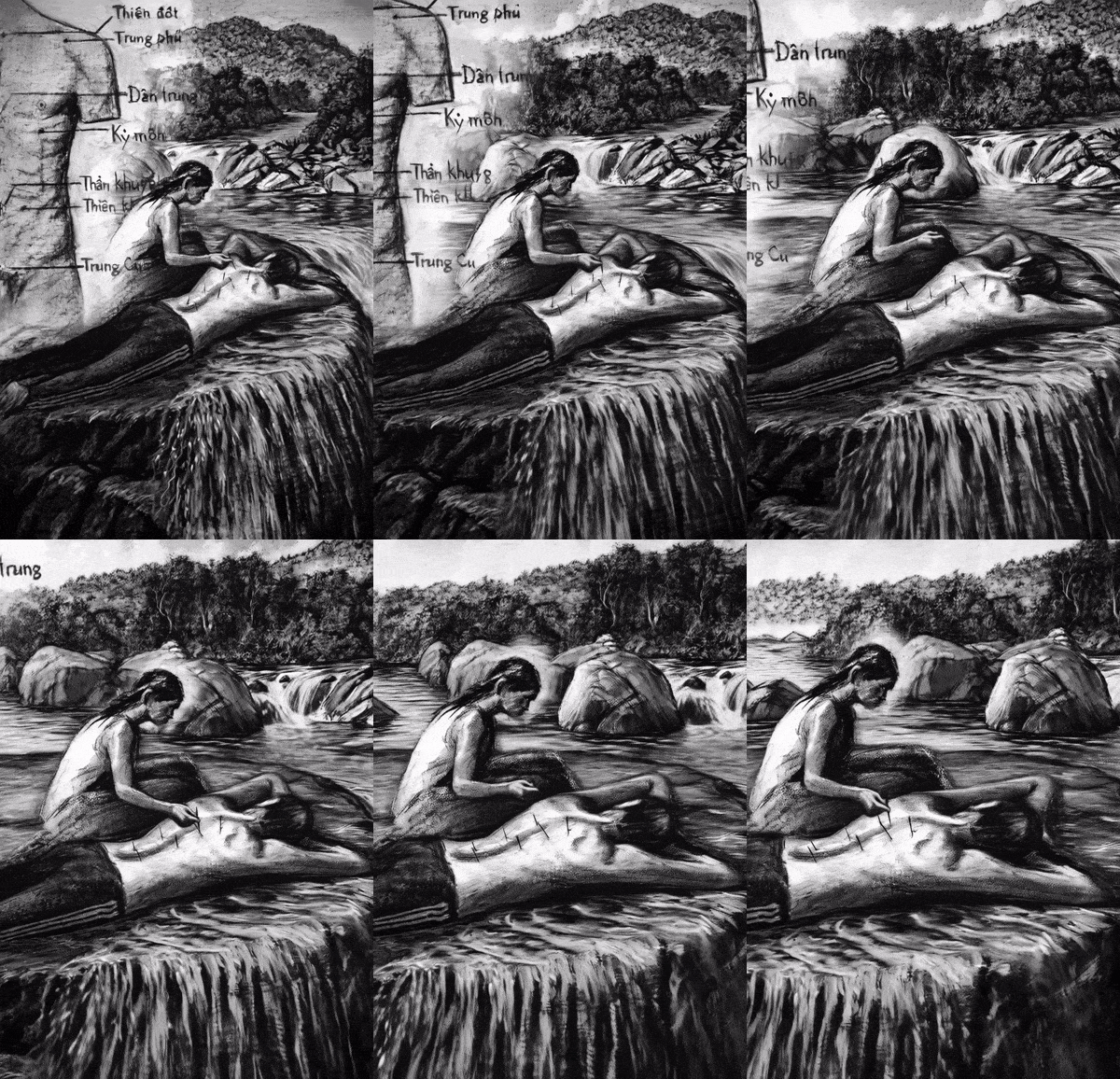
In this report I describe a visit I made to the mountains of northern Vietnam, on the Siam Peninsula, and the new delights I discovered there relating to the local biodiversity and traditional medicine. Specifically – acupuncture.
In Hanoi is a traditional medicine clinic called the Eden Clinic. A place of healing named after the biblical sanctuary. Its owner, Dr. Hana, makes an appearance at the very end of Book 3 of the Eurasian Odyssey. She was the acupuncturist I met at the end of the four-year bicycle journey that had changed my life, and as the journey ended, she gave me an acupuncture treatment that felt like being given a completely new back. Three months before this current trip, I went to see her again for a second session.
Each time, Dr. Hana’s acupuncture needles reach deep into my body and produces results I don’t expect. Three months ago she focused her needles on my lower back, and immediately after the session, the clicking in my ankle that had been bothering me – clicking hundreds of times a day for over a decade – abruptly ended. My biomechanics had been thrown off-balance by a series of botched knee operations carried out by orthopaedic surgeons of Western Medicine (specifically the NHS Gravy Train), leaving me with one leg severely weakened after losing two critical tendons and a cruciate ligament. This evidently increased the biomechanical load on the ankle of my other foot. My working theory is that Hana’s needles “woke up” some dormant muscles in my lower back – the unblocking of Qi flowing through the body’s twelve meridians suddenly allowed power to flow to those dormant muscles, restoring some kind of balance to my frame.
Since then, Dr. Hana and I grew closer, eager to find reasons to work together more. When the opportunity of a six-day window for an excursion opened up, I proposed that she come with me into the mountains of northern Siam to help me search for the elusive “Incense Tea”. It was something I had been gifted while cycling through Laos on the Eurasian Odyssey. A heavenly divine tea obtained by boiling branches of an unknown tree. Dr. Hana has deep knowledge of traditional medicine, and speaks both Vietnamese and English, so I figured it would make for an interesting team expedition. I negotiated with Dr. Hana to have her perform daily acupuncture sessions as well as provide me with the following:
Terms
Dr. Hana’s responsibilities are:
- Vietnamese-English interpretation
- Assistance with the search for “Incense Tea” and sharing knowledge of traditional medicine
- Cooperate with Julian’s ideas
- A mini acupuncture course to teach Julian to treat his friends around the world
- A short daily diary in English from Dr. Hana’s perspective (included herein)
- Wi-Fi hotspot sharing so Julian can get online and make work calls
- One full acupuncture treatment
Fee: $100 USD per day ($400 total).
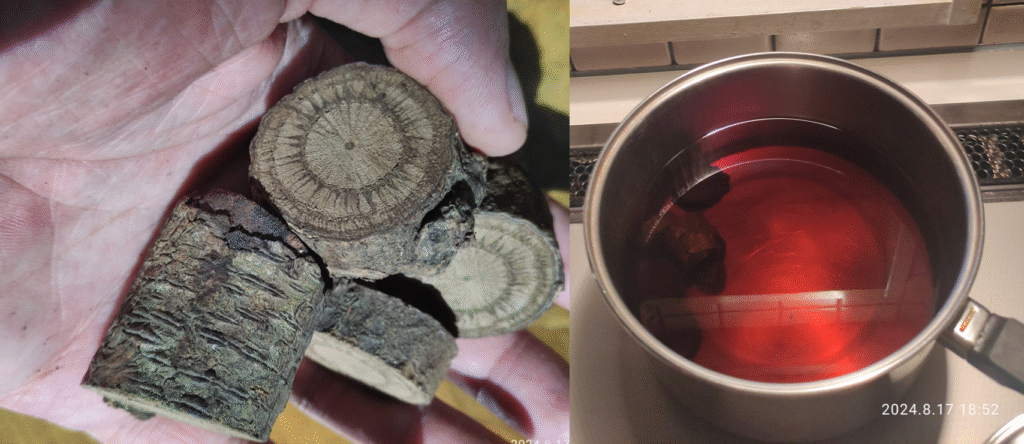
Regarding the Incense Tea, when I went deep into the mountains of Laos looking for a practitioner of Laos Traditional Medicine, I obtained mysterious branches from a kind of village healer. The old man gifted me several strange branches as a gift. Though we couldn’t communicate at all, he instructed me with Google Translate that I should boil the branches when I got home. I did just that – yielding a majestic deep red broth. It had an incense-like scent, mystery and aura, and yet, unlike actual incense, it wasn’t something you burned. It was just tea – so by drinking it you could enjoy a much, much gentler fragrance than incense itself. The branches were analyzed and later identified as branches of a vine called Gnetum, native to Southeast Asia.
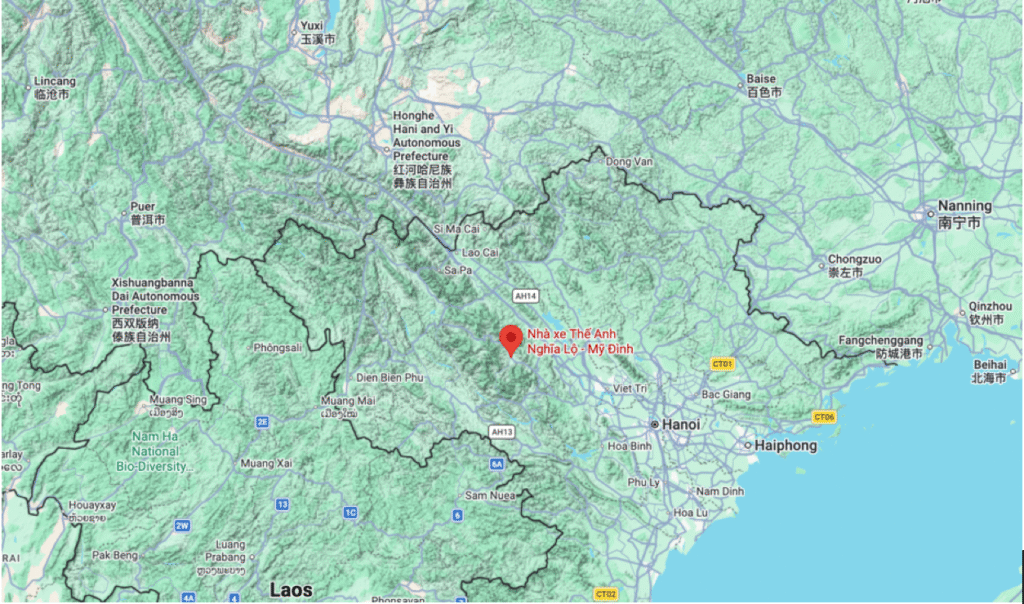
And so, in search of Gnetum, Dr. Hana and I boarded a bus out of Hanoi on May 12th, 2026, heading for the mountain town called Nghia Lo. Nghia Lo looked ideal to me because it’s only about 200km from Hanoi, and it also seemed developed enough to use as a base for further exploration into the surrounding mountains by renting a motorbike. Generally speaking, this region is well-known for its exceptionally rich biodiversity. It’s mountainous, tropical, and sits at the crossroads of multiple national borders, linguistic and cultural zones. Southern China, Thailand, Laos and Myanmar are all fairly close by, including the famous Golden Triangle, just over the mountains to the west. This region is quite literally called the pharmacy of Vietnamese and Lao traditional medicine, both cousins of Traditional Chinese Medicine.
Dr. Hana’s motivations for joining this excursion were more complicated and personal.
She’s 32 and runs her own traditional medicine clinic in a stylish district of Hanoi. But she finds herself in a rather dire private situation from which she needed escape, if only for a few days. Running your own business is hard enough, but on top of that, her husband is an Italian man who has been bedridden for three years and is entirely dependent on her. He had a heart attack at the young age of 32 and has since then been flat on his back at home all day and night. He never steps outside, can’t walk, can’t even clip his own nails. It’s a weird case, because whenever she takes him to a hospital, doctors send him home with a clean bill of health. He himself doesn’t trust Western Medicine – a conspiracy theorist, apparently, the kind which has multiplied since COVID. So he just lies in one of the rooms at the clinic, a situation that by any yardstick is both unimaginable and unacceptable. When I first visited the Eden Clinic two years ago and received my first ever acupuncture treatment in a life-altering session, it never occurred to me that there was a sick man lying in the room next to me, all day.
But by my second visit, three months ago, the signs of deterioration were impossible to miss. The clinic was a shadow of what it had once been. The office used to be clean and orderly, with shelves lined neatly with rows of jars containing traditional medicine materials. This time, however, mould had spread throughout the clinic (her husband runs the air conditioning on full blast around-the-clock). Shelves were bare of any medicinal materials and products (they’d been moved into his air-conditioned room to protect them from the condensation that he was causing), and the financial and mental strain on her was obvious as she burst into tears at my questions. Dr. Hana has genuine skill, but in conditions like that, you simply can’t work properly. She understood the dire straits she was in, and when I put my proposal to her, she grabbed it eagerly with both hands.
Though she was probably picturing some kind of romantic getaway in the tropical forests, or at the very least, a change of scenery, I intended to work her properly.
Anyway, here was a person capable of doing necessary, valuable work. And yet, she was being held back by her personal situation, pushing her towards her limit. Perhaps this trip could turn out to be her tipping point. Such was the backdrop against which we left for Nghia Lo.
Day 1
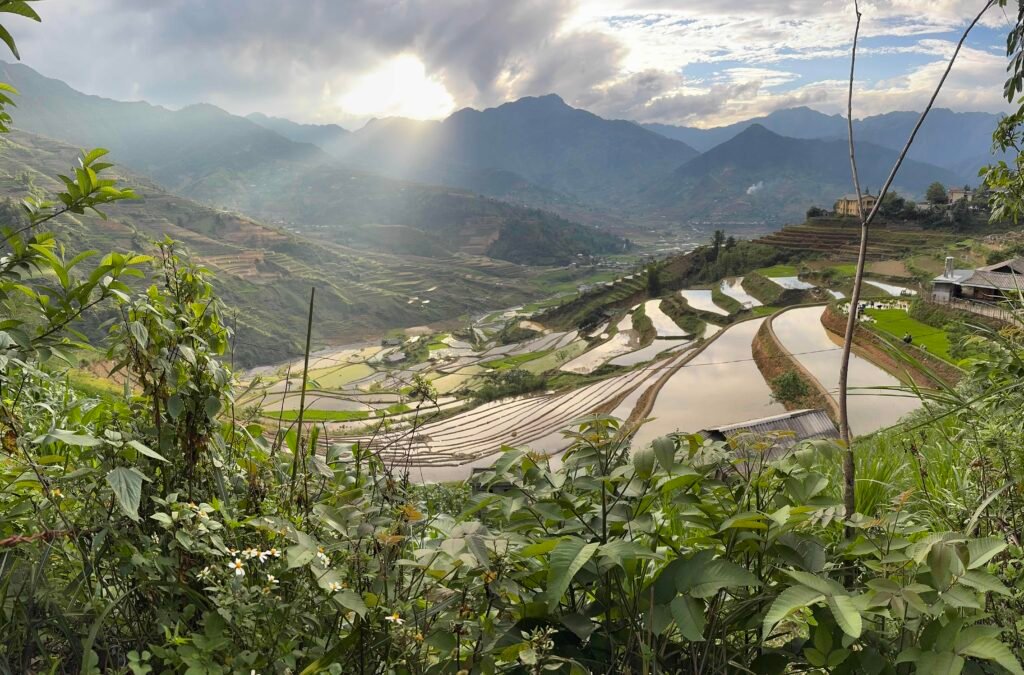
We arrived in Nghia Lo, a six hours’ bus journey from the pollution and sticky heat of Hanoi, surrounded on all sides by mountains. The region is home to a minority people called the Táy, who were busy with rice cultivation when we arrived. The mountain slopes were covered in gorgeous rice terraces, like something out of a travel brochure. The rice eaten here exceeds all imagination and expectation. I’ve met plenty of biased Japanese people who swore that Japonica rice was the best in the world, but I wonder how many of them have tasted the rice of Nghia Lo. The rice springs back when you bite into it, alive and fresh. Countless waterfalls tumble down the mountain slopes, replenishing the terraces with clean, earthy mountain water – the kind the rice loves to grow on.
At once, we rented a motorbike and headed straight for the local market. We showed vendors a photograph of the distinctive cross-section of the Gnetum branch, and it was recognized immediately. We bought a bag of Gnetum branch shavings, rushed back to our hotel and brewed it in hot water. Not good at all. The faint incense aroma was there, to be sure, but the astringency and tannins were bitter and unpleasant to drink. It was definitely a kind of Gnetum, but inferior in every way to the magical, incense-scented variety the village healer in Laos had gifted me two years ago. We decided to push deeper into the mountains the following day, calling off the search for that evening.
That night, Dr. Hana suddenly asked me to give her a massage. Was she confused about who was working for whom? We were here on business – why should I give her a massage? She flopped face-down on the bed and took her top off. Well, at least it was an opportunity to have a professional evaluate my shiatsu technique, so I gave it a go for 25 minutes. She moaned and groaned, and then gave me a respectable score of 8 out of 10. I accepted the compliment grudgingly – I wanted to improve on this trip too.
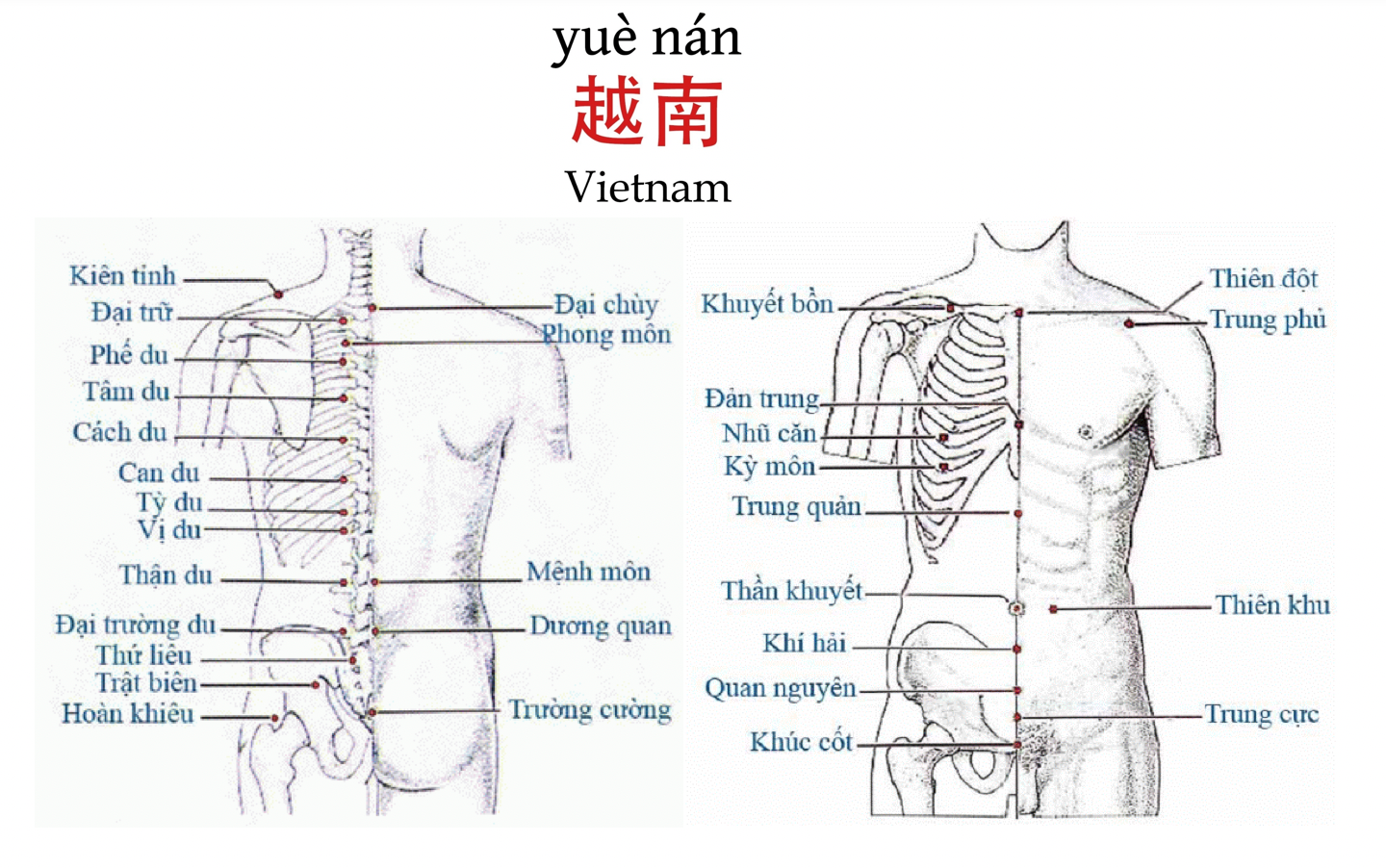
Dr. Hana then taught me Auto-Acupuncture – how to needle your own pressure points. Very interesting. She showed me pressure points running from the back of the hand down to the space below the knee that I could reach myself. When a needle hits the right spot, the surrounding muscles contract involuntarily and you become aware of your body in an entirely new way. The purpose of acupuncture is principally to remove blockages of “Qi” that flow through the body’s twelve meridians and to restore its invisible circulation. Aside from that, stimulating and manipulating the nerves is deeply satisfying and relaxing, and it’s far more technical than simple shiatsu massage. If done without knowledge, you’ll hit a blood vessel, causing bleeding and bruising. That’s why traditional medicine has what amounts to a “map” of the body, which are charts that exist in both Chinese and Vietnamese traditional medicine.
Dr. Hana’s Diary:
The journey began almost quietly, with nothing more than a plan, a name, and a destination I could hardly picture in my mind. Julian was the one leading the way, speaking about medicinal herbs as if they were hidden treasures waiting for us somewhere deep in the mountains.
Nghĩa Lộ, a small region in northern Vietnam now connected with Lào Cai, was a place I had never seen before. Yet somehow, it already felt as if it were calling us.
The sleeper bus was surprisingly comfortable for me, rocking gently through the night. For Julian, however, with his 1.87 meter frame, it was another experience entirely. He kept shifting, stretching, trying to fit himself into the narrow space. Eventually, though, he surrendered to exhaustion, and before long the steady sound of his snoring filled the quiet bus around us. I smiled to myself. Some people do not need perfect conditions in order to rest.
We arrived around 3 PM. The air immediately felt different, fresher and calmer than the cities we had left behind. I was relieved that I had prepared some food in advance, so after eating quickly, we went to rent a motorbike. Julian naturally chose something sturdy and reliable, the kind of machine that looked ready for whatever roads might lie ahead.
We rode through unfamiliar streets before stopping to eat again. The food was simple, but incredibly fresh, the kind of flavor that speaks for itself without needing any description. Soon afterward, we found a quiet place to stay. Just the two of us in a small but comfortable traditional stilt house. There was something deeply peaceful about it.
That evening, something unexpected happened. I showed Julian a little about acupuncture. I thought it would only be a brief introduction, but the moment he saw it, his curiosity came alive. He immediately wanted to try it himself. Carefully, but without the slightest fear, he began placing needles on his own body. Hegu. Quchi. And especially Zusanli. At one point, he casually stood up and started walking around the room with a needle still in his leg.
I watched him, somewhere between amusement and admiration. Some people learn slowly. Some people prefer to observe first. And then there are people like Julian, the kind who learn by stepping directly into the experience without hesitation and without fear. At that moment, I realized that this journey might become something very different from what I had first imagined.
The first day came to an end quite late. I drifted into sleep with a deep sense of contentment after such a long and eventful day. As I lay there, I found myself quietly looking forward to what the next day might bring, hoping for new discoveries waiting somewhere ahead of us. There was something about this journey that was awakening something deep inside me. Perhaps because, deep down, I have always loved exploring the unknown. I have never truly believed in placing limits on myself, or on what life might reveal beyond the familiar.
Day 2
We rode along scenic mountain roads in the beautiful sunny weather searching for fresh Gnetum and found the same disappointing variety as yesterday’s at a market in a nearby village. It was still too early to give up our search. Tired, we abandoned the search for that day, deciding to push even deeper into the mountains the following day.
Google Maps showed a hot spring just north of Nghia Lo, so Dr. Hana and I went there in the afternoon. I have an exceptional talent for finding extraordinary things, and this hot spring was exactly that kind of spot. A concrete monolith had been built, with a tank holding the hot spring water at its core. Ferrous source water flowed from a perimeter channel into concrete baths built around the monolith. The spot was a little outside town and not at all well known to tourists. When we arrived at around 4 PM, a dozen Vietnamese labourers were bathing. The rear of the monolith served as the women’s bath, though it was easy to catch a glimpse of their nakedness by walking a short distance away from the structure. The water temperature was perfect, and if not for the powerful sun, you could bathe comfortably for a long time. And it was precisely the relentless sun that was the hint: come at night and I’d have the place to myself, and the water would be cleaner.
I started to get irritated with Dr. Hana. I’m used to travelling alone, and when I travel with someone else their presence tends to grate on me after a while. She kept touching my belly unnecessarily on the motorbike, and she seemed to have forgotten that she was here to work on contract, not on holiday. She wanted to go to the hot spring together at night, but I had no intention of that.
Dr. Hana’s Diary:
I woke up early in the morning, feeling excited and full of energy. The city I live in, along with the responsibilities on my shoulders, has never really allowed me to feel truly free.
I waited for Julian to wake up so we could continue our journey. He seemed exhausted after days without proper sleep, and I figured he finally had a good rest. I let him sleep a little longer, knowing his body needed it.
We had a few clues about the herb he was looking for from a local. I told him we should head straight there. After eating, we went to the market. A traditional herbal medicine seller had a wide variety of remedies. I showed her a picture of the herb Julian was searching for. She immediately recognized it. “Gắm,” she told us. Its scientific name is Gnetum montanum or Gnetum. Probably we’re talking about Gnetum montanum because it’s more famous and common in the North mountains. I became curious almost instantly. Surprisingly, this herb was not even on my personal list of medicinal plants, and I realized I knew almost nothing about it. That only made me more interested.
On the afternoon of the second day, Julian took me to a hot spring. I had never been to one before and could only imagine how hot the water would be. In winter, people come to soak and relax, but in summer, I thought it might be unbearable. When we arrived, everyone was already in the water. I hesitated for a moment, then decided to step in. The heat surprised me. It was much hotter than I expected. After the bath, my whole body felt flushed, like a freshly boiled shrimp. At that moment, I realized I should have brought more water with me.
Later, we asked the locals for advice and were guided to a traditional herbal healer. She told us that the Gắm plant is very hard to find, as it only grows deep in the forest. Even when people manage to find it, it is often sold immediately. She introduced me to many other herbs, which was still an interesting experience.
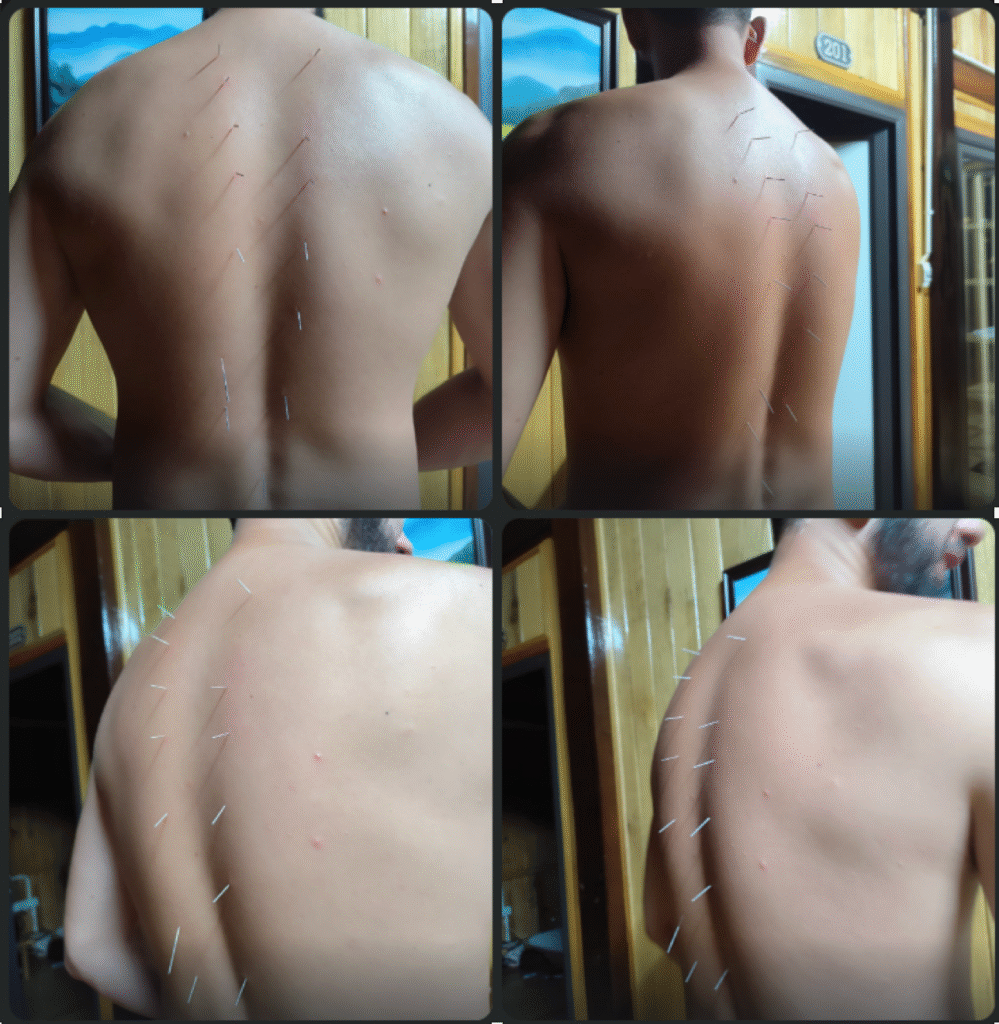
Even though we felt a bit disappointed about not finding Gắm, I learned something valuable. The type Julian has been searching for is extremely rare. It is called Red Gắm. That night, I performed acupuncture on Julian. His back looked like a dragon, covered with needles. He even stood up and stretched while the needles were still on his back.
Day 3
Our search for Gnetum once again yielded nothing good. We were cruising on the motorbike when the heat became unbearable, so we stopped at a river north of Nghia Lo for a swim. I left Dr. Hana there so she could bathe in the river after me, and rode on alone towards higher ground. Rounding a bend in the mountain, a strangely familiar smell drifted through the air.
Cinnamon. A solitary house sat at the bend, and the owner had peeled cinnamon branches laid out on the ground drying in the fierce sun. I went over, picked up three large strips of bark, pressed about 15 cents’ worth of Vietnamese currency into his hand and left. A little further up the road, house after house had the same thing – cinnamon bark laid out on the ground and drying in the sun. It reminded me of something I’d observed on the island of Ikaria in Greece, in the Blue Zone. In Ikaria, one valley would have a particular herb growing, for example sage herb, but then the valley next to it would have something else growing entirely, like wild lavender. Biodiversity has this logic to it: go around or over a mountain and you find a totally different zone, with completely different plants. And in this region, it seemed that there were literal forests of cinnamon trees.
My mood soured that evening. Spending every moment with Dr. Hana was wearing on me. At 10 PM, I had her come to my room and perform acupuncture on my back. This was not for my education or training; it was forced, unpaid overtime, pure and simple. She seemed to have picked up on my moodiness and that she was on the receiving end of it, and proceeded to needle my back with a watermelon in one hand, munching on it lazily.
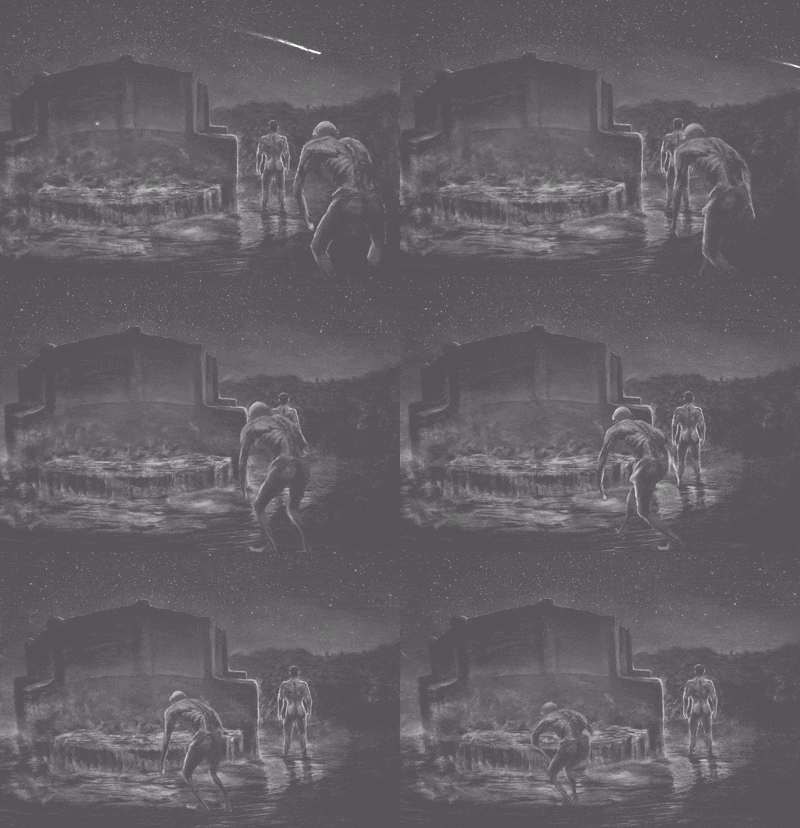
When the session was over and she’d gone back to her room, I rode myself to the hot spring just before midnight. As predicted: not a soul was there. In the starlit darkness, iron-rich spring water flowed gently from the well outwards. Silence but for the sound of water. Even the insects had gone to sleep. No street lights. Coming here alone at this hour was a masterstroke. I used my phone’s light and looked at the water. Clear, transparent, with layers of green algae formed around the edge of the bath welcoming me. I stripped, got in, and started scrubbing my skin with a small stone that had been left by the Vietnamese labourers on the ledge. The smooth stone was rough enough that dead skin rolled up into neat little dark bicone shapes when I scrubbed my arms with it. And when I ducked under the water, the dead skin washed straight off. It doesn’t matter if the water got a bit dirty – no one comes at this hour and it’ll be clean again by morning.
After that, I just sat in the concrete tub, in no hurry, pouring water over myself, soaping up, then standing and letting the cold night air tingle my skin. Right then, a blinding streak of light crossed the night sky. It was a big asteroid, burning white like a welding arc light. It cut across the night for a few seconds before breaking apart into red-hot fragments and disappearing.
The shooting star made me think of a woman. The stripper from Atlanta: Cleo. I’m due to meet her in her city in ten days. We’d been messaging each other on Instagram every day and both looking forward to seeing each other again. She told me while I was in Afghanistan that shooting stars were a good omen. I asked her what that sign was and she said it suggested limitlessness. Whatever the case, this exquisite moment I was living felt like evidence of what Cleo had said: that human limits don’t actually exist.
If humans had limits, the injury in my legs would not have permitted six years of continuous bicycle travel.
If humans had limits, I could not have spent six years free from the chains of capitalism, playing Odysseus.
Some limits are not real – they are just a limiting belief within the human psyche. Anything can be possible if you do it. What is impossible for men becomes possible with God, as Jesus Christ said. The shooting star reminded me of that.
Standing there naked, gazing up at the night sky for a while afterward, I sensed a movement behind me. A mysterious silhouette moved through the dark. My heart seized and I immediately let out an involuntary “OHHH!!” A naked figure was passing behind me. An old Vietnamese man. He moved in perfect silence – head shaved, bare feet, stark naked – as he shuffled towards the bath with a bowlegged, unhurried gait. His poor gait confirmed he wasn’t a physical threat. I said shin chao to him but he ignored me completely, as he laid down on the ground face-up in a spot where the overflow from the baths drained, and he started bathing there.
Though we do not speak the same tongue, we had a like mind. Since I don’t know when the next person might turn up, I’ll bathe a bit more cleanly next time.
Dr. Hana’s Diary:
Thanks to the herbal healer’s guidance, I learned about the 5k market. It is called the “5k market” because, in the past, everything there was sold for only 5,000 VND. It was very cheap and mainly served as a place for locals to exchange food and daily necessities. The market was more than 30 kilometers away from where we were staying, so we woke up very early to go there.
On the way, I noticed a small herbal shop. We stopped by and tried a few kinds of herbal remedies. However, most of them tasted quite unpleasant, so we decided to continue our journey to the 5k market.
The market was simple and not very crowded, as it was harvest season. In the end, we bought a Gắm plant to experience it ourselves.
Day 4
Our final day. If we didn’t find fresh Gnetum today, our mission for this trip would be a failure. Dr. Hana slumped into the seat on the back of my motorbike and we headed straight for the deepest mountains of the area – further than we had gone in these last few days. This was in consideration of the biodiversity of this region, since now I understood that you can’t find a new “zone” of plants and vegetation without traversing a mountain first. We stopped first at the cinnamon house I visited yesterday. Dr. Hana translated while I asked about the uses and properties of cinnamon. In Persia, they brewed dachin (دارچین) as tea. In Vietnam, however, they bite straight into the bark and chew on it, which is actually pretty nice and warming. In Chinese Traditional Medicine, cinnamon is a “hot” ingredient belonging to the same category as ginger. According to Dr. Hana, it warms the body, promotes metabolism and circulation, and brings heat to “cold” areas and energy-deficient states.
We looked over the spread of cinnamon barks covering the courtyard and filled a plastic bag full of them, guided by the owner’s own eye for the choicest barks. After we filled the bag, the owner was drawn in by my enthusiasm for his cinnamon and went inside his house to show us his prized cinnamon oil. Each drop pressed from kilos of cinnamon, it was an extraordinarily precious oil. Local cinnamon harvesters no longer produce it – there was no profit in it – and as such was a genuinely rare item. When I asked if he’d sell me some, he laughed, said no, and at the same time, gave me a small portion as a gift. A precious treasure.
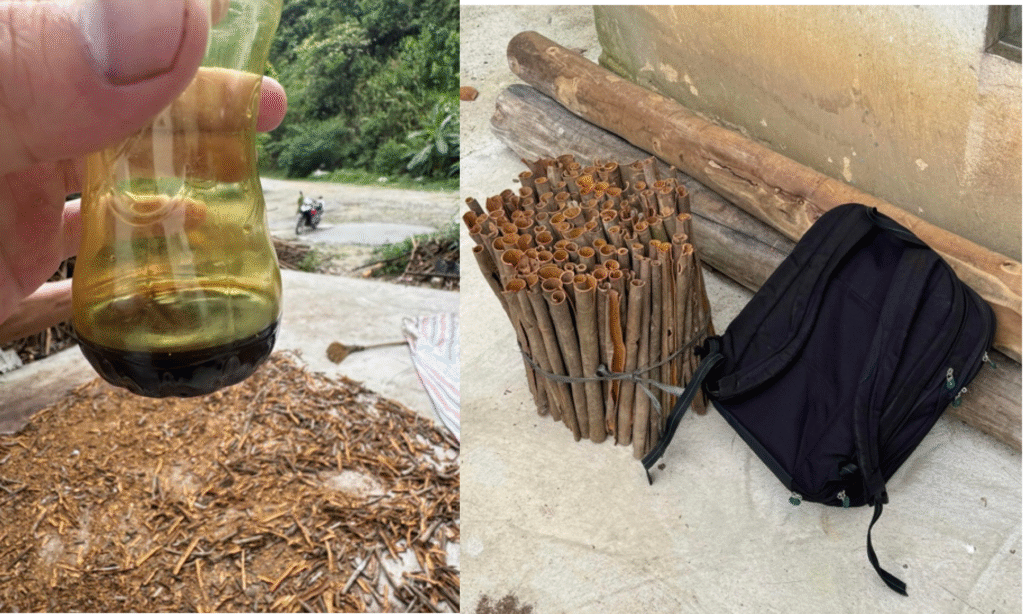
Once I filled my sack with fresh, beautiful cinnamon barks, and I looked at the precious gift I received, I immediately stopped feeling anxious and annoyed about the failure to find Gnetum. Because if Gnetum did grow in this region, we would have already found good specimens by now. The absence of Gnetum simply meant that it doesn’t typically grow in these particular mountains! That’s it! A few hundred kilometres away, deep inside of Laos further within Siam, the fresh Gnetum that the village healer once gifted me undoubtedly grows abundantly. What I had learned instead from this trip was that the Siamese Peninsula, in this region in particular, has extraordinary fresh, delicious, beautiful cinnamon. You have to respect biodiversity for what it is. It is nature’s selection of her treats, and we have to be humble and respect that not everything is available everywhere all the time. And that’s fine.
Coming here led me to something new and wonderful. And that was enough.
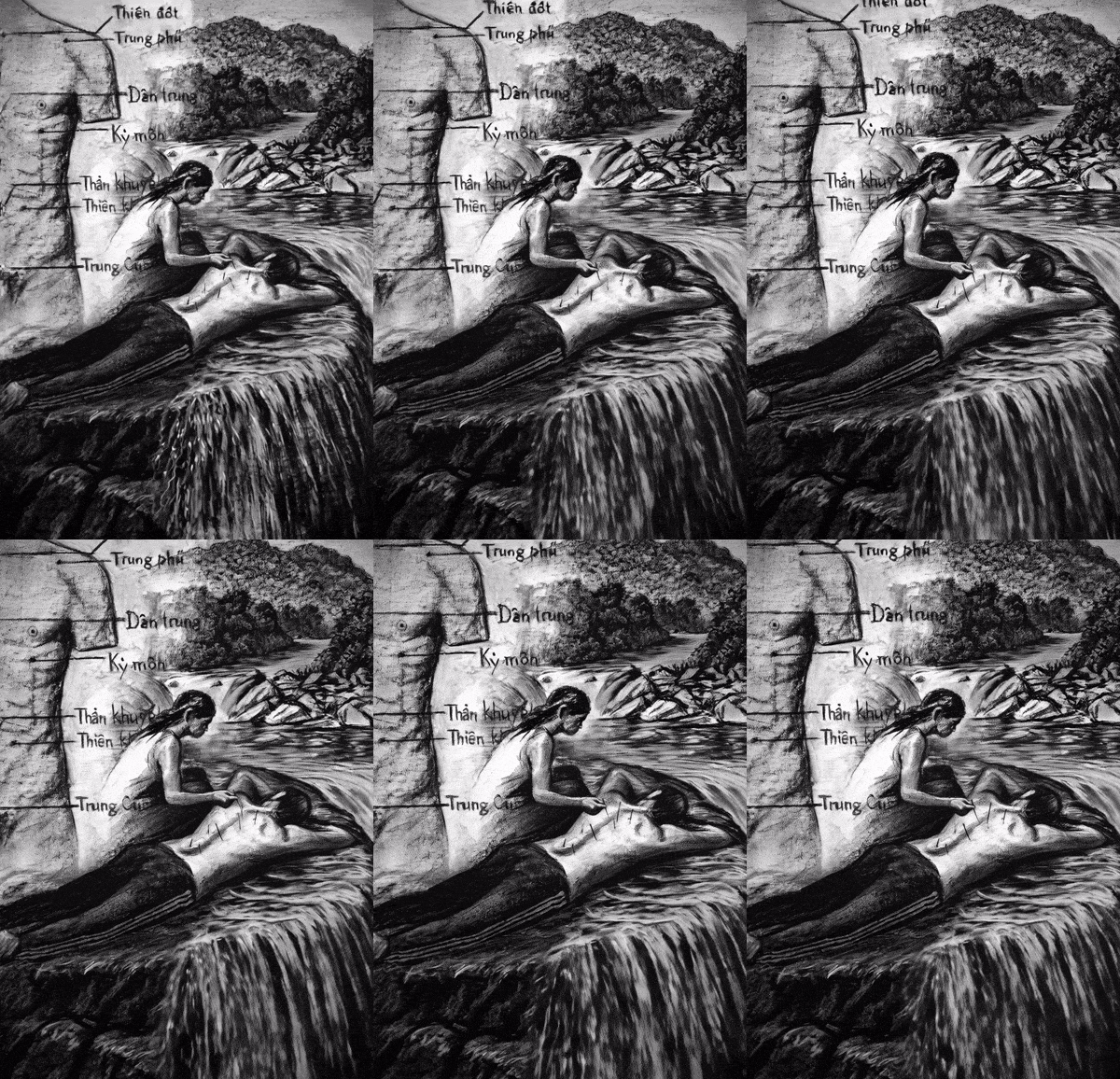
Deeper into the mountains we went. At another bend in the road, we encountered a large waterfall and river. We stopped to take a rest, climbed up on the rocks where the water tumbled, and enjoyed a picnic. Rice congee made from the finest rice of Nghia Lo, durian and mangosteen. Durian is in season right now. Every morning, Dr. Hana and I had a routine of visiting the local market to buy the day’s durian, two kilos of mangosteen, congee and balut boiled duck foetus eggs. When our picnic was done, I told Dr. Hana to perform acupuncture for me on the rocks by the waterfall. The local children that arrived afterwards watched this ethereal scene with puzzled curiosity.
After riding 80 kilometres, we finally reached a mountain pass. Going further would on one hand promise new discoveries of exotic and diverse ingredients, but on the other would also entail riding back in the dark. We stopped at a shop right at the top of the pass, where a jar of paste made from Gnetum leaves was for sale. I paid a steep price for it, opened jar to reveal a dark paste and mouthed a dollop of it. It was dull – an unremarkable product. But that’s fine. This is what it means to respect nature – there’s no point searching a region for something that doesn’t grow there and expecting to find quality. This principle holds true in the mountains of Vietnam as it does in every city in the world. The land and her produce are fundamentally inseparable. Having confirmed this utterly simple fact, and with the finest cinnamon this land produces in my bag, our trip was over.
Over our final dinner, Dr. Hana and I took stock over beautiful, tasty, freshly steamed local rice of Nghia Lo with some stir-fried greens. I’d instructed the chef not to use any artificial MSG seasoning, so I could savour the taste of the ingredients. I was getting stuck into the meal when a WhatsApp message arrived… from Dr. Hana’s husband:
Husband: “Hello Julian! I’m Hana’s husband. Please read this article I wrote. Everyone needs to read this and understand it!”
A link to a suspicious article followed. I opened it with chopsticks still in my right hand. It was an obscure, virus-related piece. “How to prevent the next pandemic”. The page was loaded with incomprehensible gibberish and jargon – the sort that no-one other than someone with an extraordinary amount of free time would bother reading, let alone to write. I told Hana straight:
J: “Hey. Just now your husband sent me some weird article. I hadn’t even given him my contact details.”
Hana: “Oh God, I’m so sorry!! He’s always writing articles like that from his bed and sending them to people.”
J: “That’s fucking cracked. He’s finished.”
Hana: “Yes, it’s been awful. We constantly fight. He has a tremendous knowledge of traditional medicine but because of his condition he can’t work face-to-face with patients. I am the only one that can do it. He sits in his air-conditioned room, never sets foot outside, and writes these medical papers and articles for his Substack blog. But it’s not enough to make a living that way. For the past few years, I’ve been supporting my family all on my own. And even though I want to use my skills to heal him, he won’t let me because he doesn’t trust me or my methods.”
J: “Well, you need to do something about your situation then, and soon. If anything is to change, it has to be soon. You’re 32 now. If this goes on for another five years, you can already see the writing on the wall – how and where it ends. Or, you take the plunge, change your life, and build on what you have. You have an outstanding, outstanding skillset with your acupuncture. You are so good at making your patients feel at ease. Your knowledge of Traditional and Western Medicine are first-rate. If you are going to develop and expand your practice, it has to be now. I know it’s not really my place to comment on another person’s family, but three years bedridden just can’t run – and not only has he sent me this incoherent article, he actually wrote this trash himself! It’s a hopeless situation, really. Honestly, if I were you – and I know you’re not me – I would’ve kicked him to the kerb long ago.”
Dr. Hana set down her chopsticks and hunched over. She knew I was right. But the person facing this impossible situation wasn’t me – some outside third party – it was her. Her family. The strength of that bond is something I cannot understand because I have no family of my own, so it’s easy for me to dismiss people and cast judgment. Though Dr. Hana may have been thinking exactly that – that it was not my place to comment because I didn’t understand – she would never say it. I was essentially telling her to cut loose a useless husband.
Maybe I’m not suited for marriage. I didn’t recognise the strength of the bond of marital, familial love. But then, is that bond really that strong? A stranger like me wanders into the stagnant garden of Eden – or the Clinic of Eden, opens the gates to that sacred place and sets about desecrating it along with the bond that holds it together: love.
***
We took the night bus back from Nghia Lo to Hanoi. Whatever there is to say about it, these past four days had been…. significant. Daily acupuncture treatments from a true master. The finest seasonal ingredients from durian fruit to rice. Hot springs, cinnamon… One delight after another. The acupuncture worked my body from the inside. Dr. Hana has been treating my body now for two years and observed the changes. “Your muscles have gotten stronger since the last time”, she said. Indeed, three months ago I had been going through a rather slack period, but the truth is that I had started a new training regime two months prior, which I’ll introduce in a separate report.
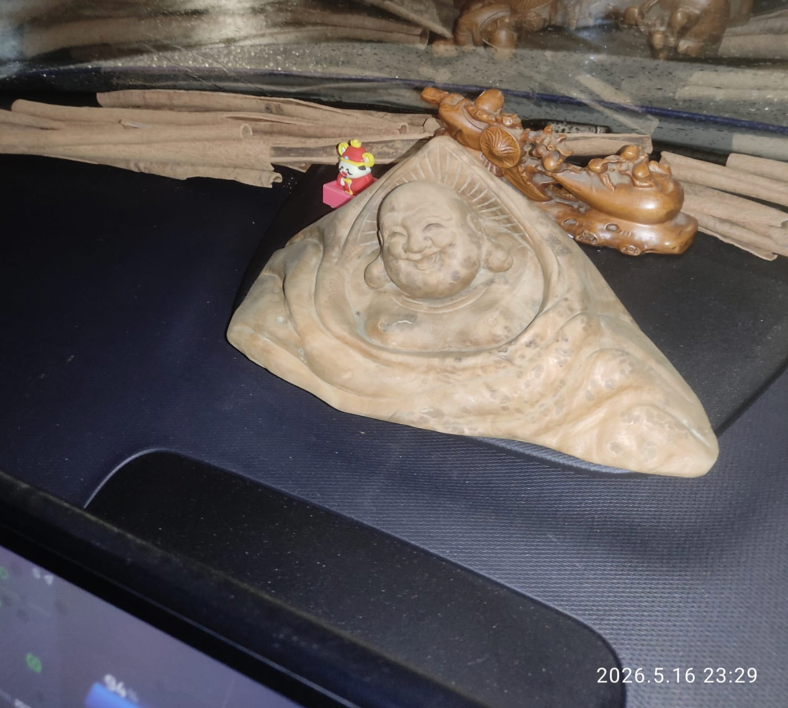
That night, I left Vietnam and flew back to Japan. Inside the taxi to the airport, it smelled truly extraordinary. I assumed it was the cinnamon in my bag, but I’d wrapped it well enough that it couldn’t be. I looked at the dashboard and there was something boldly strewn across it. Long cinnamon barks. I told the driver about the trip to Nghia Lo and his face lit up, proudly announcing with a big grin that the cinnamon on his dashboard was from his hometown, a place called Viet Lam, not too far from Nghia Lo. It doesn’t happen often, but on this occasion the tip went from driver to passenger: a few sticks of cinnamon as a parting gift.
On the way home, I received the following message from Dr. Hana:
“I know my situation is bad. But I’m okay. I love my family. I’ll manage somehow. I won’t give up on my husband. Life right now is really hard, but that’s alright. Sometimes you need to fight!”
There’s that Asian girl blind loyalty. Heh. Well then… fix your husband first, and then go to the midnight hot spring… with him!!
Dr. Hana’s Diary:
Today was the last day. Julian decided to climb the mountain to search for more clues about the precious medicinal plant. The road was long and exhausting, leading up to the summit of a steep mountain called Mù Cang Chải. The mountain peak rose nearly 3,000 meters above sea level. I have to admit one thing: Julian has very solid driving skills.
We stopped by a waterfall. The water was crystal clear, shimmering with shades of blue and green. We rested there for a while before Julian came up with the idea of trying acupuncture right beside the waterfall. It was such a unique experience that I couldn’t resist giving it a try. As the sunlight warmed his skin and the cool stream flowed nearby, Julian lay there quietly, feeling the fine needles resting across his back. From time to time, I gently splashed a little waterfall water onto his back. Whenever his muscles moved, the needles shifted softly with them. After a while, Julian slowly rose to his feet.
Once the session ended, Julian and I continued on our journey. Before long, he noticed a house filled with piles of cinnamon, its rich fragrance drifting far into the air. We stopped by and discovered that the owner ran a vast cinnamon farm, covering nearly ten hectares of land. He welcomed us warmly and let us experience the sun-dried cinnamon branches spread across the courtyard, releasing a deep, sweet aroma under the mountain sunlight.
The owner of the cinnamon hills carried many dreams in his heart. He hoped to create a place where travelers could experience the authentic traditions and services of the local people, yet he had never found anyone able to truly help him bring that vision to life.
After our conversation with the owner of the cinnamon farm, we continued on a long journey before finally reaching a small camp near the mountaintop. There, we also spoke with several local villagers. However, they told us that the medicinal herb we were searching for could only be found deep within the forest — a place so remote that very few people were able to reach it.
Julian seemed a little disappointed, perhaps because the herb he had hoped to find remained hidden deep in the forest. Still, at least he had discovered another precious treasure of the mountains: cinnamon. The owner of the cinnamon farm generously gifted him some cinnamon essential oil along with a large amount of cinnamon bark to take home.
That day, the final stretch of our journey felt incredibly long. Late in the evening, before boarding the car back to Hanoi, I gave Julian one last acupuncture session. Perhaps that final acupuncture session helped Julian recover some of his strength after a long day of driving through the mountains of Mù Cang Chải. It gave him enough energy to board the car and make the journey back to Hanoi. And so, it was the final acupuncture session before Julian left Hanoi to fly to Japan. I hoped that this treatment would bring him comfort, relaxation, and renewed energy for the journey ahead.
End of report.